Showing posts with label homeschool. Show all posts

Thursday, December 21, 2017

Four Year Checkpoint

With this Christmas break marking the anniversary of when Monkey left public school, it's now been 4 full years of homeschooling! I can't believe I've now been doing this for almost as long as Monkey was in public school (4.5 years). It's been a great journey, and I definitely feel that not only are the kids learning, but I'm learning as well! I definitely did not know this much World History until now and I'm re-learning Chinese (well, I'm not even sure I knew this much Chinese before, but I might have, and then forgotten many of the Chinese characters that the kids are learning. I certainly can read much better than I could before!)

This is the first year that I've actually kept a gradebook and given them tests and scored their assignments. They've actually been responding quite well to this. It's more work on my part, but in preparation for doing transcripts from high school, I started grading this year.  This fall we also started doing more formal grammar, as Monkey started an online English class.  I'm learning from the class teacher what things I need to cover for Bunny.

Anyway, I don't post much here anymore, but I do think taking stock of the year and setting up goals for the next year has been helpful for me, so I'll do it again this year.

Looking back at last year's goals that I set:
  1. More cooking- We did fairly regularly up until this fall, when we stopped doing this weekly. Now it's more like 1-2 times a month, but I'm hoping to restart once-a-week cooking for both kids in the new year.
  2. More writing-We did better on this for this fall, than last spring. We did do more writing in general though, even starting from last spring, but since Monkey started taking an online English class which includes writing, this has forced us to have more writing each week. I have been having Bunny do the same writing assignments that Monkey does with his class.
  3. More note-taking skills - The kids are doing all their lessons independently now, so I just assign the pages to read and they take notes. We still need to work on note-taking in a 'live lesson', so when we've watched videos, I recently started having them take notes during the video, and I plan to continue doing that in the new year. 
  4. More friends - The co-op friends are 'gelling' more and more, and having the after-co-op playground games of Capture the Flag have definitely given them more of a social outlet.  Bunny's new friend from last year got us connected to a First Lego League robotics team (and then we pulled in Monkey's old friend from public school) where the kids were able to have some more regular contact with kids their age this fall, so that was a great addition.  We find that outside of co-op time though, we don't really get together with other homeschool families. Bunny was able to do a "Education Fair" project with one of her friends from co-op in the spring, and that was fun for her.  
  5. More logical thinking- Our co-op is running a Critical Thinking/Logic class for middle schoolers this year so got that covered! 
For the year ahead, I'm hoping to work on these new goals

  • Coding-They've gotten pretty good at Scratch and Monkey  has done some HTML and JavaScript coding, but Bunny has only recently been introduced to written code. We'll probably use Khan Academy for this.
  • Electives- I've always encouraged them to do their own "Free Exploration" after finishing their work, but haven't really pinned them down on systematically learning something of their choice. Some ideas that they've come up with are piano, flute, sewing,  probability and statistics, or art.
  • Classic literature - Not sure what we will read but I'd like to add some classic novels to our reading.  In general, Bunny reads a lot, but all of it is contemporary. Monkey doesn't read that much for leisure so I'd have to assign reading anyway, might as well introduce some classics. 
We will definitely continue with the things that we started working on this year, but as those become more routine I'm hoping to add these other goals in.

Wednesday, January 11, 2017

3-year Anniversary of our Homeschool Journey

I can't believe we've been doing this for 3 years now. I haven't kept up with this blog much, but for posterity's sake, I thought I'd record some notes as we pass this milestone.

Things are now even more streamlined than a year ago. We've kept a similar routine, but have added a daily viewing of CNN Student News (now called CNN 10) each morning, and then we do our Bible lesson, and take time to pray about what we learned in the Bible lesson as well as what we saw in the news segment. We now do science and history each day (rather than focusing on one or the other for a few weeks at a time), and we got more serious about learning Chinese. The kids are both at a point where they don't fight me about assignments. They sometimes complain, but they don't throw fits like they used to. Monkey is still not the best at time management, but when motivated, he can do it. I've found that letting them listen to music actually helps them stay on task.

I have to say, I am LOVING homeschooling! I love that we have the afternoon and evening free for fun family activities or extra curriculars without the pressure of homework. I love being able to take a topic they're interested in and jump right in and start learning about it. I love that we don't have to deal with classroom/school drama. I love that we can take vacations whenever (well, I'm still limited by the # of vacation days that we have from work). I love taking random days off. I love that we have time to do volunteer work.  I love not rushing for the bus in the mornings. Most of all, I love seeing them learn! When out of the blue, they're just doing their own thing, they'll pipe up and recall something they learned and how it connects to what they are currently doing, it just makes me so excited (and a little relieved, that YES, they are actually paying attention).

Looking back at some of the goals I set last year...

1. Adding more formal Chinese teaching, maybe introducing more reading/writing, since we've mainly focused on listening and speaking.


2. Getting them to pick up more life skills/chores, such as cooking or cleaning. 

Bunny came up with a great system over the summer which has worked really well for cleaning the house. Each person gets assigned 1 room and 1 task per week for which they are responsible the entire week. At the end of the week, each person is award points based on what is expected to be completed for that room/task, out of 10 points total. Then additional bonus points are added if they go above and beyond and do extra work (like dusting, washing out the bunny pen, etc.). Whoever has the most points gets to choose a fun family activity, an outing, or a restaurant. This has really a blessing in keeping the house in a manageable state, as well as giving us a lot of fun family time. We've gone on hikes, played various board games, watched movies, eaten at a variety of restaurants, baked cookies, gone out for ice cream...

3. Give them some practice with studying and taking tests, since we have not done any testing (we will do our first standardized test this spring).

They took the Iowa Test of Basic Skills (ITBS) in the spring and they did great! The time limit threw them a bit, but they still did really well. We have also started using Quizlet to test how much they know. Doing a quick search on there finds a lot of quizzes already created by other people, and often for the same curriculum we are using.

4. Doing more discussion about their reading. We don't have any reading plan or curriculum right now, so we need to work on understanding more complex literary elements.  

We tried Progeny Press Literature Guides and Total Language Plus Study Guides and ended up liking Progeny Plus better. The questions are more in-depth. TLP had a lot of spelling and vocabulary review, and basic reading comprehension, and some light writing assignments, but I liked the Progeny Press had more literary analysis and writing prompts, as well as other project ideas.

We also added spelling this year, using Sequential Spelling. Monkey has a hard time with spelling, but so far, so good. It was so frustrating with his spelling before that I just gave up on it. Now that he's older, I think he's getting it. I read once somewhere not to worry about spelling, many kids will just naturally pick it up if they read a lot, but if by middle school, they are still struggling, then go ahead and teach spelling...so I'm taking that advice.

For the year ahead...

We're at such a comfortable point right now, with curriculum we're happy with, a routine that works, and a good level of engagement from the kids, that there's not much I would want to add! I think a few ideas are:
  1. More cooking- I'm hoping to get them to cook a meal a week, but that might be too ambitious of a goal. Bunny won't touch raw meat and Monkey has a fear of pouring salt (after dumping salt all over a dish one time when it flowed too quickly) and neither one will cut onions.
  2. More writing-We currently don't do that much writing, maybe once every 2-3 weeks. 
  3. More note-taking skills - We started on learning how to take notes this fall, but it's slow-going. I don't think I ever was explicitly taught how to take notes, but I realized there's a lot of elements to think about- how to distinguish main points vs. minor details, how to write succinctly, how to organize the notes so it's not just a string of phrases. At this point, I often have to stop what I'm doing and tell them "This is important, write this down." and then pause for a good 2 minutes for them to catch up with writing.  
  4. More friends - Bunny made a new homeschool friend this year, and has easily made new friends previously. They're both getting more comfortable at co-op (this is our 2nd year), but hopefully Monkey can develop some deeper friendships in the year ahead. This goes for me too-getting to know more of the other homeschool moms in the area. This is hard for me, as I'm perfectly fine being quiet and not engaging with new people, but I do know the value of having other homeschool moms as friends and I think I'm finally feeling comfortable myself at co-op.
  5. More logical thinking - Hoping to add the Fallacy Detective to the mix this year. We've used Logic Liftoff periodically, but I think maybe they need more of a challenge.  

Tuesday, March 15, 2016

Pi Day Fun

Since yesterday, 3/14, was Pi Day, we celebrated by doing some pi-related activities, I used Khan Academy to have the kids learn and practice some pi-related concepts. For Monkey, we did volume and surface area of a cylinder and volume of a sphere. For Bunny, we did circumference, diameter, and radius of a circle.

For dinner, we made a quiche:

And for dessert, we made berry pie, with a 'pi' crust: 


Friday, March 4, 2016

Chemistry for Tweens

Monkey has always been interested in learning about chemistry, even in early elementary school. Unfortunately, chemistry was not one of the areas covered in public school. When we began homeschooling, we were excited to finally have the time to teach him some chemistry! We began with:
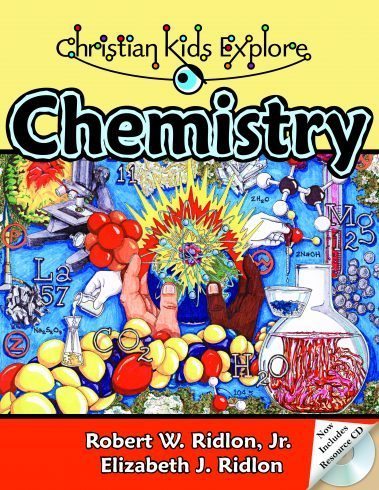
Christian Kids Explore Chemistry - I think this was a great introduction to concepts and terminology of Chemistry. It had an activity for each unit, and was laid out very simply, with review questions that were easy to use. It covers the parts of atoms, molecules, acids and bases, chemical symbols, and even some very basic introduction to organic chemistry (hydrocarbons, esters, etc). It's a pretty straightforward text, with simple explanations, but it wasn't EXCITING...


We completed this at the end of his 4th grade year and sort of forgot about it. Recently, Monkey again expressed interest in learning more chemistry, and after asking him about what he learned already, I realized he didn't retain a lot of it (mostly not remembering the alkanes/alkenes/alkynes, acids/bases; the basics of atoms and bonding were among areas he did remember). So we searched for another Chemistry curriculum, since I had already sold the Christian Kids Explore Chemistry book.

We found Ellen McHenry's book:

The Elements - This starts from the basics, so some of it is review for Monkey, but it works out great since Bunny wasn't with us the first time we covered chemistry. This one is written in a way that kids can really relate to, with humorous drawings and explanations, and LOTS of hands-on ideas. There's 'worksheet'-like activities to reinforce the lessons, there's jokes, and games to print out, and links to resources on the internet. We are LOVING this! It really makes chemistry a lot more fun! For a reluctant chemistry student like Bunny, this is perfect. For the more serious student, this might seem too goofy, but as a kid, I think they would still enjoy the casual, everyday language and the references to more relatable ideas like baking.  We will follow up with her second chemistry book: Carbon Chemistry


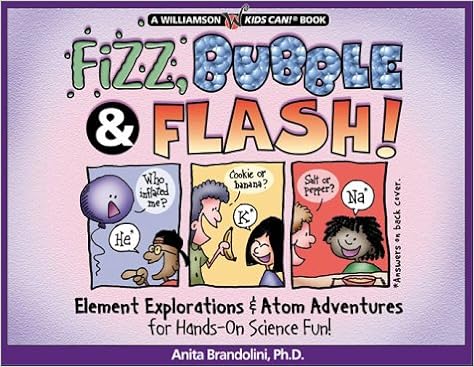
Along with this, we are using Fizz, Bubble, Flash , which goes through various elements by families with lots of hands-on activities/experiments and interesting tidbits about compounds made with those elements.


These books are both fun and engaging, cartoony, yet filled with a LOT of information. Definitely beats a science textbook for this age range.

Monday, February 8, 2016

Language Arts Options For Kids Who Like Variety

I've hard such a hard time sticking with one Language Arts program.  Because of this, we've tried a variety of approaches and materials.  Maybe one day we'll find the perfect fit, but until then, it is trial and error. I like getting a taste of the different approaches because:
  •  I don't think there's one single "perfect" way to teach Language Arts-there's many learning styles and many different needs among all kids. 
  •  I don't think there's any program that will 'teach everything' that encompasses Language Arts-some will focus on writing, others on spelling, or vocabulary or grammar. Honestly, I tried teaching spelling separately and gave up. It just got too be too much, when adding writing on top of that, and grammar, and we only recently started adding vocabulary formally. 
  • I don't think that there's any one program we could always stick with forever for any one child, because the child's needs change over time. Maybe they need work on grammar one year, maybe an emphasis on writing another year, and maybe creativity in yet another year. 
This is what we've used/currently use:

Writing Strands, Level 3 : The text is written to the student so it can be done independently. It gives specific assignments, how much to write, what order to write it in, but doesn't give much guidance in making it sound good. We used it for about a year and then switched to IEW for writing. 


Learning Language Arts Through Literature, Purple Book :  This is a very gentle approach to LA. It covers copywork, spelling, grammar, a little bit of writing and vocabulary, all based on a literature passage. There's some passages which have a whole book study included in the book, and some passages are just passages from another book that the student may or may not have read. We intended to read all the books referenced, but found that 1-2 were not easily found (not in the library). Each day's lesson may only be as short as 4-5 practice words/sentences to practice that day's lesson. It didn't seem very systematic in presenting the spelling or grammar rules, it's just based on what is found in the literature passage. It makes it less 'rote' and 'dry', but may seem a bit haphazard to do '-es' plurals one day, and prepositions the next day, then 'research this person' the next day. But at the same time, it gives variety so keeps it from getting repetitive or boring. The kids thought it was too easy though, but at the same time, these were new lessons to them in terms of various grammar rules or spelling. I think that just speaks to the fact that it makes grammar and spelling seem not-so-out-of-reach. I liked that the spelling words are picked from the passage and chosen by the student based on what they don't know yet.

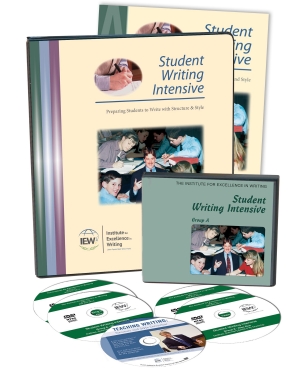
Institute of Excellence in Writing (IEW)- This is a GREAT writing tutorial! We did the Student Intensive A, which has a video that teaches how to structure various styles of writing (e.g. reports vs fictional narratives), and also how to make it sound good with what they call "dress-ups" (sentence openers, adverbs, clauses, transition words). It's VERY specific about asking students to incorporate certain techniques, giving them practice in using them. My kids didn't always enjoy writing this way (being told they HAD to use certain "dress-ups"), but they definitely expanded their writing styles and sounded much more polished after going through this. We are currently using American History Volume 1, but they chose not to write on the topics given. We were still able to use the techniques being practiced, but they chose their own topics to write about.  The topical guides include vocabulary so we have been using this set of words for vocabulary this year. 

Grammar Land - Very old story with the parts of speech as personified characters in a court case. It was pretty amusing and a good introduction to the different parts of speech. I think some of the older language style was difficult for the kids to grasp, but overall, I thought it was a fun way to learn about parts of speech.


Brave Writer, Writer's Jungle - We used elements of this writing approach. It's almost the opposite of the IEW approach, but I think both have valid points about the teaching of writing.  While IEW focuses on specific methods to create structure and style, Brave Writer's approach is more 'question driven', personal, and free-flowing.  The premise to her approach is that writing is an expression of yourself, so you want to be gentle and let students find their voice, and become comfortable expressing themselves in the written language, rather than force them to write on topics they are not excited about and using specific structures that feel awkward to them. I think you need both, so for some periods of time, we use the IEW lessons, and other times, we use the Brave Writer approach, with a lot of 'free writing', and copywork and limited 'must add these things in your writing'.

The Word Snoop - This is a fun book that explains all kinds of interesting tidbits about the English language-palindromes, anagrams, lipograms, malapropisms, oxymorons, etc., plus a history of the evolution of the English language-where it came from way back in history, to current day text-speak. We all loved this-very informative, yet fun to learn about. 


Life of Fred Language Arts - My kids love Fred. He's quirky and smart and talks about a lot of random facts that the kids find very amusing. Even though these are supposed to target high schoolers, my 4th and 6th graders have been doing OK with them. The first one definitely is OK for younger kids, but I've read that the other three books are much harder.  We are now in the middle of the second book, and it does introduce a lot more concepts that may or may not be above their heads, but so far, they are still absorbing the information, if not mastering it.  I believe these books are meant to be read and re-read, so I don't mind them not mastering it all on the first time through, as they will encounter it again later, and at least now, they have been exposed to the information.  This, like the Life of Fred math books, does not go in any particular order and does not present anything as a straight-foward 'lesson', but as Fred's story unfolds, he throws in all kinds of grammar lessons in the midst of telling the story. The downside of this series though, is the lack of practice questions (this would be a 'plus' according to my kids though, as they hate repetition). But because of this, for additional practice and correcting errors, I've started using this next product.

Editor-in-Chief , Critical Thinking Company - We are using Level B1 right now, using their software package rather than the printed book.  This product gives a variety of passages with errors that need to be corrected (grammar, spelling, punctuation, and I think later on, content matching the illustration), The student acts as a 'detective' in searching for these errors and marking the corrections, based on a series of options which they select.  I love the concept, but I think I would go with the book next time. The software is interactive and has 'bonus games' as a reward for completing the lessons, but trying to click on the right reason for the error has been very frustrating for my kids (does the subject/verb agreement fall under 'Usage'? or 'Grammar'? or 'Spelling'?).  They know it's wrong, but can't find where to locate the reason in the menu system.  Both of my kids need a lot more practice in detecting errors in their own writing, but, going by the 'Brave Writer' approach, being critical of their own writing is disheartening, so I like the idea of searching for errors in SOMEONE ELSE'S writing.  

Total Language Plus Study Guides - This incorporates reading comprehension, grammar, spelling, and vocab all based on a piece of literature. There's many guides for specific book titles. We used the one for "Carry On, Mr. Bowditch".  I was drawn to it because it covers reading comprehension, as well as the other areas of LA that LLATL covered, but it includes the entire book in depth, chapter by chapter, not just short passages. I like that this includes vocabulary/spelling with words found in the book, and discussion questions/reading comprehension questions for each chapter. The grammar is mostly dictation and 1 'activity' a week of correction, underlining parts of speech, etc.  I felt that having more direct grammar teaching would have been more useful. I don't know if other study guides are similar, since I only have experience with this one. We ended up skipping a lot of the spelling exercises, just because I don't feel like it was all that necessary. Some kids may enjoy the various spelling practice though (my kids don't).

With all these options, we tend to mix it up every few weeks. Some weeks, we do 1 day a week of copywork/cursive, free write, Editor-in-Chief, Latin/Greek roots(just looking up 2 assigned root words on wikipedia and making an index card for their notes), and 1 chapter of Life of Fred.  Other weeks, we do a week-long writing assignment from IEW. Some weeks, we focus on a single book, like the Word Snoop or doing a study guide from Total Language Plus. I think breaking it up makes it more enjoyable for the kids and keeps them from getting tired of the same thing week after week. 

I'd love to hear any other suggestions of what has worked well for other people and perhaps we'd add it to our medley of choices!

Wednesday, December 23, 2015

2 Years Already!?!

I cannot believe it was 2 years ago this week, that we pulled Monkey out of school. I was both scared and excited to start! Looking back, I think I was TOO eager to start, we started right after coming back from our Christmas vacation trip, when I think we should have taken a few more weeks off to 'de-school' before jumping in.  Anyway, hindsight is 20/20, and while it did take a while to get into a groove, I think we have finally found that groove! Adding Bunny to the mix only slightly stirred the pot, but overall, we have gotten in a good routine that seems to be working.

After 2 years, I think we've finally settled into a routine that feels comfortable.

Each week, I pencil in what they'll do for the week. Sometimes I don't know what we'll cover on which day until the night before, so I don't fill it in until after we've completed the day. For History or Science, I have a list of readings, activities, videos, links that we plan to do over a whole unit, which might last 1-2 months, so we just go down the list and try to plan how much to cover each week.


I write up what they need to do for the day on a white-board (sometimes separating the independent vs. work I do with them), and they erase it as they go:

And generally, this is how our day goes: 
  • Morning Bible lesson/devotional together at the breakfast table
  • Science/History - read aloud and any activities together (We are alternating Science/History every couple of weeks)
  • The rest of the morning is spent doing what is on their white-board, which usually covers math, geography, Chinese, and/or language arts. If I need to spend time individually with one of them for any subject, I do it one-on-one, but mostly this is when I do my work for my job.
  • Lunch - While they eat, I will often read aloud some light geography or history when our focus is science, or we will watch a Chinese kids' video over lunch, or practice some Chinese words. 
  • After lunch, they finish up any other individual work that needs to be done, and can read, play, whatever until whatever afternoon activity we have (sometimes shopping errands, or extracurricular activities or playdates). They get screen time if they've finished their work, read something, done something creative, and played outside (or inside if weather is bad). 
It's not quite a schedule and every day there's flexibility for them to choose in which order to do things. When we have co-op or field trips or other activities, we just push things back or skip the 'schedule' for the day. 

So as I enter my third year, these are some of the areas I want to work on:
  • Adding more formal Chinese teaching, maybe introducing more reading/writing, since we've mainly focused on listening and speaking.
  • Getting them to pick up more life skills/chores, such as cooking or cleaning. 
  • Give them some practice with studying and taking tests, since we have not done any testing (we will do our first standardized test this spring).
  • Doing more discussion about their reading. We don't have any reading plan or curriculum right now, so we need to work on understanding more complex literary elements.  
We're in a happy place right now so I don't want to rock the boat too much, but hopefully I'll add these in slowly as we continue. 


Friday, December 4, 2015

Christmas Unit Plans

Next week, I'm so excited that we are planning a week of reading Christmas-related stories. Although we have not done "Santa Claus" at all for Christmas, they know who he is. I wanted to introduce them to some other familiar classic stories related to Christmas, so next week we will read a couple of picture books to introduce them to:
  • The Legend of St. Nicholas
  • The Nutcracker
  • A Christmas Carol 
  • "The Night Before Christmas" poem
We are planning to write our own rendition of "The Night Before Christmas" and maybe watching a version of A Christmas Carol. We are also planning to see a performance by the Russian Ballet of the Nutcracker at the end of the week. This will be their first exposure to a ballet performance. I'm curious what their response will be!  Anyway, I figure all of this can be considered Language Arts (Reading, Poetry) and Music/Arts (Nutcracker Ballet). If I can get them to DO some ballet, perhaps we'll throw in Phys Ed in here. :) 

Weekly Wrapup: Human Anatomy Skeletal System

Taking a break from US History, we've started in on our Human Anatomy unit. We are using Apologia's Exploring Creation with Human Anatomy and so far, I love it! It gives a lot of in-depth detail, with lots of hands on ideas. We are also reading from Sassafras Adventures: Anatomy, because the kids like the adventure story of the Sassafras twins.  The teaching aspect though, is really too high level and rushed, so we use it as an overview/introduction to the system we are studying.  They cover each of the systems in the human body in 2 chapters, with one of the characters usually being an 'expert' that shares information about the various body parts, but I feel like the way it's done, it's all blurted out in a really dense paragraph of scientific detail, thrown in the midst of the adventure story. It's not slowly interspersed, and I think when it's too condensed the kids don't really absorb any of it. So for scheduling purposes, we are going in the order of the Sassafras book chapters so that we can read the story in the correct order, and then skipping around in the Apologia book to use the chapter which corresponds with the system being studied. We are planning about 2 weeks per system.

We started off with the skeletal system, covering joints, cartilage,  bone structure, formation of new bones, names of various bones of the body. Some of the hands-on projects we did were:
  •  a beaded spine craft on a pipe cleaner with sequins in between, different colors represent the cervical, thoracic, and lumbar vertabrae 


  •  looking at a shin bone from a piece of meat to see the compact bone vs the soft inside
  •  looking at the bones of a rotisserie chicken
  •  looked at paper skeleton that we just happened to have access to because my husband made on back in high school


  • soaking a chicken bone in vinegar to see what happens when the calcium is removed by reacting with the vinegar (the bone becomes soft)
Many of the ideas I'm using for our Anatomy plans came from a Konos user who has posted her lessons on her Free Unit-Study webpage. This is a great resource that we're going to use throughout our unit. 
 
We also tied in our Chinese lessons, learning the words for various body parts, as well as the word for bone.  Unfortunately, my Chinese vocabulary doesn't extend to words like "osteoblasts" or "cartilage" or "mandible"! 

While we are taking a break from History, I am still reading aloud from George Washington's World, which gives us a brief look at what was going on in the world during various parts of George Washington's lifetime. We are not studying world history in depth right now, but this will give a bit of backdrop to the events of American History that we had recently studied, so later on, when we do world history they will have some familiarity with it.

This post is linked up with Weird, Unsocialized Weekly-Wrapup.

Wednesday, November 11, 2015

The Hardest Part of Homeschooling (For Me)

As much as I love homeschooling, there's definitely very real challenges.  Many of the articles on the internet about homeschooling talk about the benefits of homeschooling (of which there are so many!), but rarely is there mention of the hardships. (Kind of like when you become a parent, people generally tell you how great it'll be and what a blessing it is, but they don't mention how physically painful the weeks after childbirth are or how hormones can send you on such an emotional roller coaster or how sleep deprivation can bring out more anger than you've ever felt). It's great to focus on the positives, but acknowledging the challenges makes me feel less alone and gives a more realistic picture of what homeschooling is like. I recently forwarded this article to a friend who is considering homeschooling:  5 Things I hate about homeschooling  and while these do resonate with me (alot! But I've managed to find ways to work overcome these for the most part, and they are no longer among my 'hardest parts' anymore...not saying they are GONE but definitely less difficult now) and I'm so thankful for this post, I realized that my biggest struggle right now isn't listed.

While some challenges may be pretty universal to most homeschoolers, there's also individual challenges based on circumstances, family dynamics, and personality. Also, I think with all major endeavors in life, the challenges will constantly change as the people involved change and as you yourself change.  At first, the hardest part of homeschooling was having a child around 24/7. After getting past that, the biggest challenge was having this huge responsbility of their entire education on my shoulders.  After getting past that, it was getting on the same page for what assignments would be done or not done, battles over refusing to complete assignments and whining about not wanting to do something.  But at this point in our homeschooling journey, I'd have to say the hardest part is something others may find pretty inconsequential...there's no single word to describe it, but I'd say it's something like one of the following:

  • Trusting my kids to get the work done in their own time.
  • Watching my kids be inefficient with their time.
  • Allowing my kids to do other things between assignments.
  • Letting my kids decide when to do their work.
  • Bridging the disconnect of my idea of a school day schedule and their idea of a school day schedule.
  • Letting go of MY idea of what needs to be done when (that that work should come before play)
As much as I read articles about the need to take breaks and for kids to have free play time (and in my head, I do agree with these), I still find it such a struggle to let them space out their work throughout the day, rather than get it all done and then have free time afterwards. It makes me so cranky and irritable to still have work to be finished at 3pm, when we started 8:30am. It's pretty ridiculous actually, and I know *I* need to change, as much as I want THEM change. I end up seeing it as "dawdling" or "distractions from work" or "not being diligent in their work habits".

To some degree, yes, they need to manage their own time, and at some point, I will need to let them do that on their own and trust them, especially as they get older. And also, to some degree, I am the parent/teacher, I certainly could just set the schedule and be done. Unfortunately, with my work schedule they have long periods of 'independent time', which I cannot be on top of them for schoolwork, so I often have to leave them with a list of assignments to complete at their own pace. The problem is my idea of "pace" is different from theirs, and it DRIVES ME CRAZY! It grates on me to hear them in the background doing other stuff, knowing that there is a ton of schoolwork to get done. Trying to reign them to get their work done just leaves me feeling frustrated and ineffective.

I've recently learned that this need for me to get things done right away, and check things off a checklist is correlated to my own personality trait: on the Myers-Brigg personality scale, I'm heavily a 'J' (Judging), and NOT a 'P'(Perceiving) personality.  A 'J' is task oriented and likes to have checklists and hates to have to be rushed to meet a deadline. A 'P' is more open ended and works in bursts of energy, and is motivated by an approaching deadline.  Apparently, my kids are the opposite of me (Monkey more so than Bunny). 

So, while this may be a pretty unique homeschooling challenge, specific to me and my kids and our differing personalities, I suppose it points to a bigger general homeschool challenge-which is finding a way to mesh the different personalities/teaching styles/expectations of parent and child.  I think probably in most cases, both sides need to adjust. It's not just the parent forcing their children to comply with the parent's way, and it's not the parent bending over backward to be someone she is not. It takes movement on both sides of the fence.


Wednesday, September 16, 2015

A New School Year Has Begun


We started back up with school last week, after Labor Day. We took most of the last month off, due to vacations and summer camps, and it was a nice break, but I was excited to get back into the swing of things-lots of fun topics planned for this year! We are going to alternate Geography, History, and Science, probably a week of each at a time (though not in a regular rotation, we might finish all the states before starting science), since the kids don't like to do Science AND Social Studies on the same day.

Plans for this Year:

Geography - US States
  • "Wish You Were Here: Emily's Guide to the 50 States"
  • State-specific books from the library
  • "How the States Got Their Shapes" videos
  • Cut-outs of each state, where they will take notes on each state, and can use them as puzzle pieces 
    Sample puzzle pieces, one from Bunny one from Monkey. They each will have a full set.

    Back of the puzzle piece (Monkey)


History - American Revolution

  • Books suggested by Truthquest History and KONOS (while I love the idea of doing the KONOS unit studies, I find that they take a lot of prep and time, so I use the book lists and maybe do 1-2 of their ideas)
  • Supplemental reading in Notgrass's America the Beautiful - I love the idea of Notgrass's History curriculum, but the kids have found the textbook not that engaging.  I think they've gotten so used to living books that reading a textbook is just really dry to them. I do love that it has mini-biographies and American landmarks mixed in with their weekly lessons, plus Bible and literature, vocabulary and writing assignments, so we'll use those parts, but the history itself, we'll mostly read from other books. The Notgrass textbook also goes REALLY fast, covering alot of ground in a single day's lesson...the entire American Revolution is only 2-3 days of lessons. Native American's were covered in a single week, as were most of the European Explorers. So rather than get a sky-high overview of each topic, we are taking our time with each topic. 
  • Liberty's Kids video series
  • Wall Timeline
This will span one wall of our living room.

  • Map of locations as we learn about the war
We'll move the people to the various locations of the battles and events we study.

  • Hoping to do field trips to Boston's Freedom Trail and Valley Forge


Science - Human Anatomy

Language Arts - Trying some new stuff this year, hopefully making it more fun. 
  • Word Snoop - This has fun and intersting tidbits about the English language-everything from origins of the alphabet to palindromes to onomatopeia 
  • Grammar-land - Story with parts-of-speech as the characters going before Judge Grammar 
  • Life of Fred Language Arts - Australia - This is the first of the Life of Fred LA series, which is marketed as high school level, but I've heard "Australia" is pretty basic and can be used for younger kids. We will see later on if we want to go on to the next book.
  • IEW US History as a base, but I've realized they don't like to write based on pre-written topics, so I'm going to use the concepts, but let them choose the subject matter. 
Math - 

Chinese

I'm not sure how many months these plans will cover, as I don't plan out each week that far in advance. We'll just keep going forward until we finish all these items and see where we are then. We're started with a week of US States and started the American Revolution this week-so far, so good! 

Monday, August 10, 2015

Weekly Wrap-up: Weather Unit

It's been a lighter load this summer, just due to family visits, outside camps, and playdates, but we are still doing a little bit so schooling. We spent about 3 weeks on Weather, learning about temperature, cold fronts/warm fronts, air pressure, precipitation/water cycle/dew point, relative humidity, extreme weather (tornados, hurricanes, blizzards, etc.), and forecasting.  What took me by surprise was that my kids had never watched a weather report on TV! Admittedly, we don't watch much TV, so that's probably why, but also, with iPads and smartphones, we've always used weather apps to get our forecasts!

We used a variety of books to do some hands-on demos and read about various weather-related topics:


The National Weather Service also has Learning Lessons with printouts to use for making weather maps, so we practiced making isobars and isotherms using their maps.

Here's a couple of our projects:
Homemade Thermometer

Assembled Weather Station Kit
We incorporated other subjects into this unit with the following:
  • Writing: Use weather in a story
  • Math: convert Fahrenheit to Celsius and vice versa
  • Computer Skills: Excel graph of temperature change
  • Greek root words: meteor, bar, meter, therm, hydro. 
  • Chinese words: rain, snow, hot, cold, temperature, degrees, clear, cloudy, clouds
It was a fun and practical unit!

Monday, June 15, 2015

Weekly Wrap-up: Trip to Utah, Native Americans, Colonial Period, and Deserts

Well, this will be more of a monthly wrap-up, rather than a weekly wrap-up, as it's been some time since I've posted. In that time, we covered Native Americans, desert animals, the Jamestown settlement, the arrival of the Pilgrims, and the starts of the Massachusetts, Rhode Island, Connecticut, and Maryland colonies, as well as taking a trip to Utah to explore some of the National Parks in the area.

We had planned the trip months ago as purely a vacation to hike and see the beautiful landscapes there, before we had even planned to homeschool Bunny and did not have a plan for science or history for the upcoming months. But turns out, our new history and science curricula had us studying Native Americans and desert animals RIGHT before our trip!

So while we were at Arches National Park, we saw a dessert cottontail rabbit, plenty of lizards, and flowering cacti.

Dessert cottontail rabbit


We also saw some Native American petryglyphs carved into the cliffs at Capitol Reef National Park. The tribes mentioned were familiar to the kids, because we had studied some of the different Southwest Native American cultures.


And of course, we learned about the formation of arches, spires and fins through erosion, and we learned about geological rock layers and forces that produced suck amazing views.


Before our trip, we did some fun Native American projects(we focused on the pre-colonial period): 
Pictographs

Various art projects

Pizza map of Native American cultural regions

Sampling of Native American food (various regions)

Attempting to build a home out of sticks

After we got back, we started learning about the colonial period and the first European settlers. No great activities or projects though, just some standard mapwork and timelines and lots of reading from our America the Beautiful textbook, Story of the World, the Light and the Glory for Children (tells the early history of America from a Christian perspective), and a few books from the library. We watched Disney's Pocahontas and picked apart the historical inaccuracies and read a few chapter books to get to know the era better:

However, we hope to visit Colonial Williamsburg and Jamestown, VA this summer! 


Friday, April 17, 2015

My Eclectic Homeschool Philosophy

Eclectic Homeschool has a great quiz "What type of homeschooler are you?" . For some reason, I love taking quizzes! Maybe it's because I like to see confirmation of what I think I am or maybe it's because it leads me to think more about what I think or maybe it opens my eyes to new possibilities. Anyway, I think this quiz is fairly accurate!

My top 5 (all fairly high scores) were Montessori, Charlotte Mason, unschooling, unit studies, and classical.

To be honest, I didn't know what Montessori was, so I googled it and found it's natural, child-led learning that believes a child will learn at their own pace, and that our most important job is to teach them how to learn and develop a love of learning. So yes, I agree with that philosophy. I was surprised Classical came up because generally I don't see myself as following the classical teaching method, but I think what put me higher on that scale was the question about Latin and logic, which I think is important (although maybe not so critical for Latin as true classical teachers would believe, but I do think logic is VERY important), and using great books from literature and history. However, I also scored high in unschooling which seems to be the direct opposite! I think maybe I just see the many benefits of the different teaching philosophies, one is not absolutely best, so I pick and choose to incorporate the various aspects from the different philosophies. Also, I firmly believe every child is unique so different philosophies will work with different kids.

So how do I mix all these styles?

We read a lot of living books rather than textbooks (Charlotte Mason)
We do dictations, copy work and narration (Charlotte Mason)
We do short lessons (Charlotte Mason) so we can have plenty of child-led free time, with various options that they can pursue in that time(Montessori, unschooling).
We use a textbook for math and will be using a textbook in addition to living books for history(traditional and Charlotte Mason)
I slip in Latin once a week and logic when I have time (Classical)
We read great classic books (Classical, Charlotte Mason), although I don't limit the kids to classics.
We do unit studies scattered throughout the year (Unit Study)
I've been incorporating an unscheduled week every few weeks for child-led learning. (Unschooling)
We use videos to supplement (Not any particular philosophy but it would not sit well with a true classical or Charlotte Mason method)

Any purist from each of these philosophies would probably say I'm not actually using that method at all because it's not complete, so maybe the only classification I can truly claim is "eclectic".  They all have their benefits, so it's hard to choose one that is 'best' for us.


Wednesday, April 15, 2015

Dig, Sow, Grow!

Today, the kids started a 12 week, bi-weekly homeschool class at a farm that will give them hands-on experience and learning about growing plants. Today was our first day, and they each took home a little tomato plant in a mini-greenhouse made from a soda bottle. They also started seeds to grow in the farm's greenhouse, and eventually, they will get to plant vegetables in their own little plot of land and tend it and harvest it, and make some food with harvest, along the way learning about soil nutrients, photosynthesis, insects(good and bad), etc. I'm so excited, because I want to learn too, for the sake of our garden, that we have been trying to establish for years.

Tuesday, April 7, 2015

Teaching Two Very Different Kids

Yesterday was our first day homeschooling Bunny and I'm so glad to say it went pretty smoothly! I had laid out the daily schedule and their weekly assignments ahead of time, with both kids doing Bible, science,  history and Chinese together, but math and language arts separately, all by lunchtime. I've always known the kids had very different personalities, but it was especially clear as they went through their day yesterday.

With Monkey, a non-sequential thinker, he never liked schedules or checklists. He liked to just go with what he felt like each day, often dragging his feet so that the work spread out all day with very little free time.  Bunny, though, is very orderly and likes to check things off her list and get them done so she can have lots of free time. Because I don't want to be at the mercy of them needing help randomly throughout the day while I'm working, we are trying a more structured schedule, starting at 8:30am. When it was just Monkey at home, some days he wouldn't even be up at 8:30, or even if he was, he putzed  around until 10-11 before starting on his work, and the work would be spread out all day. Bunny, however, at 8:32 was chastising Monkey about "making us late for Bible time".


So we got off to a good start-I worked with Bunny on math while Monkey worked on Language arts independently. Right away I could feel the difference. Bunny set up a spot on her clear desk for homeschooling. She wants to sit in a chair and have a shelf, in her room. Monkey has always resisted desk work and insists on being in the same floor, if not the same room as me. He rolls on the ground and lounges on the couch and if he's at a table, he gets up over and over, (Over the past year though, I've begun to insist that he does written work at a table, rather than on lounging on the ground, because he's so easily distracted, but he can stand, not sit if he's at a table, as long as he has a firm surface to write on).  Monkey picks up math concepts really fast, I barely have to teach him. My work with him is helping him to be careful and not sloppy with his arithmetic, keeping his work organized and not scribbled illegibly all over the page, and negotiating how many problems on the page to do. Bunny, on the other hand, took some explanation to get her to understand how to do the math (multiplying 2 digits by 1 digit), and she got frustrated because she didn't get it. After she understood, I asked her to do the practice problems but out of habit, I said she didn't have to do them all (Monkey hates needless repetition of the same type of problem). She proceeded to write out all the problems neatly and orderly on a separate piece of paper and decided to do ALL the problems! 9 problems took her maybe 3 lines of paper. This would've taken an entire sheet of paper for Monkey, and probably taken him 3 times as long (not from not understanding, but just from dawdling).

We then switched so Bunny did Language Arts while Monkey did math. There are 5 days of lessons, and Monkey usually would do just 1 day at a time, even though I've told him he can go ahead and do more, and have less work to do later in the week. Bunny finished 3 days worth in the time it took Monkey to go to the bathroom! She would've done more if I hadn't told her to save some for later this week. That NEVER happened with Monkey.

We moved on to science - Animal Classification. Because Bunny doesn't like to read non-fiction, I'm planning on reading aloud a lot. Monkey used to read almost all his social studies and science independently. So for now, I guess I'll just read aloud to both of them.  That's going to be a change for me to get used to...more time spent hands-on for  science and social studies.

That's all we did for the core academic subjects yesterday. Later she worked on her nature journal, which she decided on her own that she would like to do as her own personal project, and started last week. We had gone out and chosen a special book for her to write her observations in. This was one of the things she was looking forward to most about homeschooling so I hope it will be a great learning experience as she observes the changes of spring.

With the new schedule, they both had a lot of free time in the afternoon, while I worked. Bunny bicycled and played outside, played with the bunnies and worked on some of the Skrafty Minecraft Easter lesson from last week. Monkey built a couch cushion fort and played Big Brain Academy on the Wii. (Normally I restrict screen time until 4:30pm, but he convinced me this was 'educational'). Overall, it was a pretty good first day!

I think it will be interesting to teach two such widely different personalities. In some ways, Bunny will be easier and in some ways harder. She is the one who will get frustrated really easily if she can't understand something, and will take longer to understand math and science concepts, but she loves to write and does well with grammar, spelling, etc. Monkey is more difficult in getting him to do work, but he understands things faster, but getting him to write, and to write with correct grammar/spelling, is a LOT of work.  I think it's the whole right brained vs. left brained thing.  I think having the more structured schedule will be better for all of us, even though Monkey may fight it at first and maybe teaching the science and social studies more hands-on will also benefit them both too.

I really don't want to do 2 separate routines, so we're combining as much as we can, but I'm going to try to make allowances for their different learning styles and personalities, within the topics we're learning.

For Bunny, more:
  • worksheets
  • straight math problems
  • writing projects
  • historical fiction reading
  • art
  • sounding out spelling words and breaking words into parts
For Monkey, more:
  • non-fiction reading
  • living math
  • word problems
  • building projects
  • computer projects 
  • visualizing spelling words
Things I think will work for both of them are reading aloud, videos, map work, timelines, free writing, Latin/Greek roots, and Minecraft projects. 

There's so many other homeschoolers who have many, many more kids, and I wonder how they keep up with all their different ages, learning styles, and personalities!


Tuesday, March 24, 2015

Quelling My Homeschooling Fears

Before we made the decision to homeschool, and as I started homeschooling a year ago, I was filled with a whole bunch of fears, which left me doubtful and anxious about our decision to homeschool.  Once in a while, they still sneak in, but in the past year, but I've learned to quell those fears and trust God to lead us and to be our children's ultimate Teacher.  I wouldn't say they are completely overcome, but when they come up, I have some ways to combat them now.

1. Fear of what other people will think about our decision to homeschool.

I'm a people-pleaser by nature, which is something I've tried to overcome all my life, but it always creeps into my life again, so when we decided to homeschool, I was so worried about what other people would think. Not just family and friends, but also just acquaintances, like the kids' extracurricular activities' teachers, or people at the store who see might see the kids school, or my dentist when I bring my child in with me to appointments! I was worried about whether I would have a 'good answer' if people asked me why I was homeschooling. I was worried that people might be judgmental and make comments that would put me on the defensive.

What I tell myself now: 
Why should I care what other people think of me and my decisions? This is my life and my kids, and different things work for different people. There are definitely going to be people who will think I'm strange...but really, I'm sure there are other plenty of people who think I'm strange whether or not I homeschool!

2. How will I know if I've taught my kids everything that "should" be taught? 

When thinking about the whole breadth of knowledge that would need to be imparted to my children, I was overwhelmed with the thought that I wouldn't cover everything that Monkey would need to know, and he would "miss out" on some subjects and wouldn't be "prepared for the world", or at least, "prepared for college".

What I tell myself now:
Partially this fear stemmed from a mentality that was stuck in "school-mode", wanting to teach what would be covered in public school, but everyone has gaps in their knowledge base, even public schooled kids! Even the top students in school don't know everything about American history, or world history or various fields of science. And even at the end of a good, solid education, I would bet most people when they leave high school (and definitely, 5-10 years after), don't remember most of what they "learned" in school.  What's important is that they learn how to learn about what interests them, and know how to find the information they need when they need it.

But what about the 'basics'? What if I skipped some important math concept? I've come to realize that if it's THAT important that they would need it on a regular basis, we're bound to run into it in every day life at some point, and therefore, it would be covered, even if we skipped around using different curricula that didn't follow the same scope and sequence.

Plus, with all I've been learning about right-brained learners, the schools' expectations are based on left-brained learners. Right-brained learners often learn in a different sequence...delayed reading/writing/arithmetic, but earlier science, social studies, etc. This completely takes the fear and stress out of 'Oh no! Monkey can't ever remember to punctuate!' (or can't spell or has trouble reading aloud, or keeps making simple arithmetic mistakes when he completely understands the math concepts). Every kid learns at a different pace and pressuring him to conform to some outside expectation just adds unnecessary stress.

3. What if I pick the wrong material to use? 

I did so much web research on various curricula, comparing and contrasting them, thinking ahead to when I would cover what topics, that it really took up way more time than it should have.  What if I purchased something and it is terrible?

What I tell myself now:
Worst case, they hate it, we lose some money, and have to buy something else. More likely case, it's not a great fit, but they do learn something, even if it wasn't that engaging, efficient, or effective. I can always try to sell the material used, and use that toward buying something else (or using free stuff on the internet, of which there is PLENTY!) or give it to someone else as a blessing to them.

4. What if I can't manage all the juggling?

On a global scale, between working an almost-full-time job, serving at church and other organizations, extra curricular activities and house stuff, what if I just couldn't juggle it all? On a smaller scale, I'm a 'checklist' type of person, and it bugs me if things are left undone. What if we just can't finish everything I planned to do for the week between all our other time commitments?

What I tell myself now:
There will be days/weeks when things are not all going to be done. I won't be able to juggle it all, and that is OK. If that means the house stuff doesn't get done, then it doesn't get done. If I have to say no to some things, I should not feel bad about saying "no".  If we don't finish everything on our homeschool weekly plan, it's OK! That's the beauty of homeschool! We can put off something to another day or the next week, or we can skip it altogether, if it's really just not going to add much value to the teaching. It's not really about trying to do everything, it's about finding a balance to choose what is most important.

5. Isn't having Monkey with me all day, every day going to drive me crazy?


I was quite comfortable with the kids being at school for 7 hours a day, plenty of time for my job and for miscellaneous errands, and sometimes a lunch out with other moms while their kids were at school. I'd be trading a nice flexible schedule for dragging the kids around with me for all my errands, appointments, and lunch dates! Plus, honestly, doesn't every parent need a break from their kids?

What I tell myself now:
Yes, it's a trade-off, but it's been such a blessing to have time with Monkey, creating that bond between us and helping us to really understand each other. Do I need a break from him? Yes, I do! In some ways, that's where having my job sometimes works out to my benefit. He goes to a babysitter twice a week. It's not 'free' time for me though....it's work time, and I try to get as much work as possible done for my job during those hours because on average, I'm probably NOT getting as much work done the other days of the week working from home with him with me. But even if it weren't for my job, I'd make a point to schedule time for him to play with other kids (as a drop-off playdate), or signing up for a co-op or a homeschool class, and time for me to go out just by myself when my husband is home. As an introvert, I NEED to be alone at some point.  So yes, it's been an adjustment to not have the freedom to just pick up and go run to the store by myself or grab a quick lunch with friends...but at the same time, I've gotten used to it. I don't plan for alot of errands, and when I do, I think of it as a chance for Monkey to see what people do in the real world and what moms need to do (we don't just sit around all day on Facebook!). As for lunch dates and appointments, sometimes I'll just take him along, or ask people to meet at my house so he just plays on his own for a bit, and I'm thankful for friends who will sometimes watch him for a short while when it's just not something I can take him to.

6. What if I mess up my kids? 

This one is a biggie, but it's also the most uncalled for. I think every parent thinks this thought at some point in their parenting journey, not just homeschooling moms.

What I tell myself now:
Does homeschooling make it more likely that my kids will be "messed up"? Probably not any more likely than they'd be "messed up" by any other decision, even if public schooled. And really, it's not all in my hands(ultimately, their hearts and lives belong to the Lord)! I think I'd be giving myself too much credit if how "well" my kids turned out is dependent on what I've done or not done. We can have influence, but so much is out of our control anyway, so I'll do my best and leave the rest up to God.