Wednesday, February 7, 2018

Cooking Lessions via Meal Delivery Kits

In my attempt to teach more cooking, we tried out two meal delivery kits-Sun Basket and Hello Fresh.  While we decided to discontinue the services, I did feel like it did its job in making the learning process easier, boosting their confidence in cooking, and giving them a wider variety of meals to try. We had coupon codes for both services (and other companies also have coupon codes readily available) so we tried them for a couple weeks.

What I liked about using the services were the convenience of pre-measured foods, the variety of menu choices and the convenience of home delivery. The pre-measured ingredients simplified the cooking process so it wasn't so intimidating and time-consuming for the kids. They could easily follow the directions and cook the meals almost entirely on their own. The menu choices were different enough (usually a choice out of 6 options) from their typical ideas of dinner food, but limited enough that it wasn't overwhelming to choose from. When I previously would say, "You're cooking this week, pick a meal", they'd often fall back on a few options that they already learned, or they'd pore over the internet and basically pick nothing, because there were just too many options.  So over the past 5 weeks, they tried meals like Filipino Adobo chicken, pork chops with maple-mustard glaze, parsnip and pear salad, udon noodles with roasted butternut squash and edamame, and two-bean enchiladas. It was fun for us to eat something different for dinner (and not have to go shopping for the ingredients!) and it gave the kids a broader range of skills and repertoire for their cooking.


What I didn't like about the services were the cost, the excessive and wasteful packaging, and the use of pre-packaged spice mixes.  The cost ends up being more than shopping on our own for food, but less than a meal out at a restaurant for the 4 of us. With the coupon codes for the first 2 deliveries, it ended up being reasonable, but on an ongoing basis, it could get pricy. We did the 'Family Plan' for both of these companies, which is less expensive but with limited menu options compared to the 'Regular Plans'. As for packaging, even though they both make efforts to make the packaging recyclable, the fact that small amounts of sauce, meat, spices, and vegetables had to be kept separate necessitates packaging for individual items. I felt so bad about just the EXISTENCE of the packaging, even though I did recycle whatever I could. It's an awful lot for one meal! Also, they often came with pre-mixed spices, which sometimes had the ingredients listed (Sun Basket did this), but to cook the same meal, you'd have to keep ordering from them, rather than being able to recreate it yourself, shopping for your own ingredients. We did manage to mimic a few, or use some substitutions, when we tried the same recipes again for a second time, but without ordering the kit.

Between the two services, Sun Basket had the advantage of organic ingredients and more exotic and varied menu options, even in their Family Plan. Hello Fresh's meals were simpler (and also therefore faster to cook), mostly consisting of pan-fryinging or roasting some chunk of meat with a sauce, and preparing an interesting salad on the side, and thus, less "interesting".  Sun Basket's meal comes with a recipe booklet of ALL the recipe options for that week, not just the meals we chose. This makes it interesting to browse, and perhaps attempt some of these recipes on our own (or maybe to tempt you to order some other meal next time when it comes back around on the meal choices). Hello Fresh sends a recipe card for the specific meal we chose. Sun Basket's method does produce a lot more waste though, if you're not planning on keeping the recipe booklet. It's about as thick as a magazine, with glossy pages and all. We did keep the booklets we have, and I've used some of the other recipes as a guide to try a few new meals for our family, shopping on our own instead of ordering from them.

So far, there doesn't seem to be an easy way to cancel the services, but I've 'skipped' all the weeks ahead that I can skip. I guess I'll have to find a way to cancel eventually, but for now I think we are still registered. If you forget to skip though, it automatically sends you the default menus for that week (and of course, charges you), so that's another drawback to these services. Overall, I'm glad we did it. This week, they cooked a meal each, but using existing recipes. It definitely took longer because of the need to measure out ingredients. Also, some of the recipes they chose had pre-packaged spice mixes, which we didn't have, so we had to make up our own in an attempt to recreate it. (We had to throw out our first attempt at the cinnamon vinaigrette dressing that we made because the proportions were so off that the whole thing tasted bitter and sour).  I'm hoping they will still continue to cook once a week, but it will definitely take more effort to pick recipes and shop ahead of time.


Thursday, December 21, 2017

Four Year Checkpoint

With this Christmas break marking the anniversary of when Monkey left public school, it's now been 4 full years of homeschooling! I can't believe I've now been doing this for almost as long as Monkey was in public school (4.5 years). It's been a great journey, and I definitely feel that not only are the kids learning, but I'm learning as well! I definitely did not know this much World History until now and I'm re-learning Chinese (well, I'm not even sure I knew this much Chinese before, but I might have, and then forgotten many of the Chinese characters that the kids are learning. I certainly can read much better than I could before!)

This is the first year that I've actually kept a gradebook and given them tests and scored their assignments. They've actually been responding quite well to this. It's more work on my part, but in preparation for doing transcripts from high school, I started grading this year.  This fall we also started doing more formal grammar, as Monkey started an online English class.  I'm learning from the class teacher what things I need to cover for Bunny.

Anyway, I don't post much here anymore, but I do think taking stock of the year and setting up goals for the next year has been helpful for me, so I'll do it again this year.

Looking back at last year's goals that I set:
  1. More cooking- We did fairly regularly up until this fall, when we stopped doing this weekly. Now it's more like 1-2 times a month, but I'm hoping to restart once-a-week cooking for both kids in the new year.
  2. More writing-We did better on this for this fall, than last spring. We did do more writing in general though, even starting from last spring, but since Monkey started taking an online English class which includes writing, this has forced us to have more writing each week. I have been having Bunny do the same writing assignments that Monkey does with his class.
  3. More note-taking skills - The kids are doing all their lessons independently now, so I just assign the pages to read and they take notes. We still need to work on note-taking in a 'live lesson', so when we've watched videos, I recently started having them take notes during the video, and I plan to continue doing that in the new year. 
  4. More friends - The co-op friends are 'gelling' more and more, and having the after-co-op playground games of Capture the Flag have definitely given them more of a social outlet.  Bunny's new friend from last year got us connected to a First Lego League robotics team (and then we pulled in Monkey's old friend from public school) where the kids were able to have some more regular contact with kids their age this fall, so that was a great addition.  We find that outside of co-op time though, we don't really get together with other homeschool families. Bunny was able to do a "Education Fair" project with one of her friends from co-op in the spring, and that was fun for her.  
  5. More logical thinking- Our co-op is running a Critical Thinking/Logic class for middle schoolers this year so got that covered! 
For the year ahead, I'm hoping to work on these new goals

  • Coding-They've gotten pretty good at Scratch and Monkey  has done some HTML and JavaScript coding, but Bunny has only recently been introduced to written code. We'll probably use Khan Academy for this.
  • Electives- I've always encouraged them to do their own "Free Exploration" after finishing their work, but haven't really pinned them down on systematically learning something of their choice. Some ideas that they've come up with are piano, flute, sewing,  probability and statistics, or art.
  • Classic literature - Not sure what we will read but I'd like to add some classic novels to our reading.  In general, Bunny reads a lot, but all of it is contemporary. Monkey doesn't read that much for leisure so I'd have to assign reading anyway, might as well introduce some classics. 
We will definitely continue with the things that we started working on this year, but as those become more routine I'm hoping to add these other goals in.

Monday, January 30, 2017

Heal the World Book Club

This summer we did a Countries Around the Globe study, using the book Give Your Child the World: Raising Globally-Minded Kids One Book at a Time, reading a number of books from this book list, making food from those countries, and watching videos about the countries we selected. Simple Homeschool had a summer book club with a continent every week with extra resources in addition to reading the books.


Simple Homeschool is starting a new series of posts for their  new Heal the World Book Club, which highlights books where kids make a difference in the world. With all the divisiveness and problems plaguing our country and our world right now, this book club focuses on how we each can make a difference in healing the hurts of those around us. We'll be following along for the next few months and I'm excited to add these books to round out the kids' reading (which usually tends toward fantasy-those often have themes of right vs. wrong, courage, and love, too, but I think focusing on more human/earthly examples could broaden their reading repertoire).

Wednesday, January 11, 2017

3-year Anniversary of our Homeschool Journey

I can't believe we've been doing this for 3 years now. I haven't kept up with this blog much, but for posterity's sake, I thought I'd record some notes as we pass this milestone.

Things are now even more streamlined than a year ago. We've kept a similar routine, but have added a daily viewing of CNN Student News (now called CNN 10) each morning, and then we do our Bible lesson, and take time to pray about what we learned in the Bible lesson as well as what we saw in the news segment. We now do science and history each day (rather than focusing on one or the other for a few weeks at a time), and we got more serious about learning Chinese. The kids are both at a point where they don't fight me about assignments. They sometimes complain, but they don't throw fits like they used to. Monkey is still not the best at time management, but when motivated, he can do it. I've found that letting them listen to music actually helps them stay on task.

I have to say, I am LOVING homeschooling! I love that we have the afternoon and evening free for fun family activities or extra curriculars without the pressure of homework. I love being able to take a topic they're interested in and jump right in and start learning about it. I love that we don't have to deal with classroom/school drama. I love that we can take vacations whenever (well, I'm still limited by the # of vacation days that we have from work). I love taking random days off. I love that we have time to do volunteer work.  I love not rushing for the bus in the mornings. Most of all, I love seeing them learn! When out of the blue, they're just doing their own thing, they'll pipe up and recall something they learned and how it connects to what they are currently doing, it just makes me so excited (and a little relieved, that YES, they are actually paying attention).

Looking back at some of the goals I set last year...

1. Adding more formal Chinese teaching, maybe introducing more reading/writing, since we've mainly focused on listening and speaking.


2. Getting them to pick up more life skills/chores, such as cooking or cleaning. 

Bunny came up with a great system over the summer which has worked really well for cleaning the house. Each person gets assigned 1 room and 1 task per week for which they are responsible the entire week. At the end of the week, each person is award points based on what is expected to be completed for that room/task, out of 10 points total. Then additional bonus points are added if they go above and beyond and do extra work (like dusting, washing out the bunny pen, etc.). Whoever has the most points gets to choose a fun family activity, an outing, or a restaurant. This has really a blessing in keeping the house in a manageable state, as well as giving us a lot of fun family time. We've gone on hikes, played various board games, watched movies, eaten at a variety of restaurants, baked cookies, gone out for ice cream...

3. Give them some practice with studying and taking tests, since we have not done any testing (we will do our first standardized test this spring).

They took the Iowa Test of Basic Skills (ITBS) in the spring and they did great! The time limit threw them a bit, but they still did really well. We have also started using Quizlet to test how much they know. Doing a quick search on there finds a lot of quizzes already created by other people, and often for the same curriculum we are using.

4. Doing more discussion about their reading. We don't have any reading plan or curriculum right now, so we need to work on understanding more complex literary elements.  

We tried Progeny Press Literature Guides and Total Language Plus Study Guides and ended up liking Progeny Plus better. The questions are more in-depth. TLP had a lot of spelling and vocabulary review, and basic reading comprehension, and some light writing assignments, but I liked the Progeny Press had more literary analysis and writing prompts, as well as other project ideas.

We also added spelling this year, using Sequential Spelling. Monkey has a hard time with spelling, but so far, so good. It was so frustrating with his spelling before that I just gave up on it. Now that he's older, I think he's getting it. I read once somewhere not to worry about spelling, many kids will just naturally pick it up if they read a lot, but if by middle school, they are still struggling, then go ahead and teach spelling...so I'm taking that advice.

For the year ahead...

We're at such a comfortable point right now, with curriculum we're happy with, a routine that works, and a good level of engagement from the kids, that there's not much I would want to add! I think a few ideas are:
  1. More cooking- I'm hoping to get them to cook a meal a week, but that might be too ambitious of a goal. Bunny won't touch raw meat and Monkey has a fear of pouring salt (after dumping salt all over a dish one time when it flowed too quickly) and neither one will cut onions.
  2. More writing-We currently don't do that much writing, maybe once every 2-3 weeks. 
  3. More note-taking skills - We started on learning how to take notes this fall, but it's slow-going. I don't think I ever was explicitly taught how to take notes, but I realized there's a lot of elements to think about- how to distinguish main points vs. minor details, how to write succinctly, how to organize the notes so it's not just a string of phrases. At this point, I often have to stop what I'm doing and tell them "This is important, write this down." and then pause for a good 2 minutes for them to catch up with writing.  
  4. More friends - Bunny made a new homeschool friend this year, and has easily made new friends previously. They're both getting more comfortable at co-op (this is our 2nd year), but hopefully Monkey can develop some deeper friendships in the year ahead. This goes for me too-getting to know more of the other homeschool moms in the area. This is hard for me, as I'm perfectly fine being quiet and not engaging with new people, but I do know the value of having other homeschool moms as friends and I think I'm finally feeling comfortable myself at co-op.
  5. More logical thinking - Hoping to add the Fallacy Detective to the mix this year. We've used Logic Liftoff periodically, but I think maybe they need more of a challenge.  

Better Chinese's Discovering Chinese Curriculum Review

This fall, we started more formal Chinese lessons than our previous informal lessons that introduced them to many common words. It was a bit haphazard, since I had no rhyme or reason to what words and concepts I taught (unless it related to a specific unit in science that we were studying), and I had no direction of where to go.


We decided to give Better Chinese's Discovering Chinese a try.  This is their introductory Middle-school/High School curriculum.  They now have a newer edition (Discovering Chinese Pro) than the one we bought, with more online resources and expanded content, but even without all that, I feel like it is a pretty effective curriculum. I think it helped that my kids were already familiar with many of the first few lessons' words, so it wasn't so overwhelming to learn all those words at once, but even so, I think it's a good pace. There's maybe 8-10 new words per lesson, and there's a workbook that goes along with it that allows the kids to practice the words in a variety of ways-straight copying, fill-in-the-blanks, rearranging sentences, answering questions, identifying radicals. I like the focus on reading and writing (whereas in our informal lessons before, I often taught words without teaching the characters, because I felt they were too complex to learn, but in this curriculum, complex characters are introduced, but we are focusing on just reading them, not writing them). There are also cut-out flashcards at the end of the book for the new vocabulary, which we have used for games like bingo, flashcard race to read it fastest, and unscramble the sentences.

Some features I liked when we decided to go with this curriculum:
  • The option to purchase a simplified vs traditional version of the book
  • The use of pinyin
  • The little cultural notes included in each lesson
  • The comic book format for teaching the new lesson
Some of the other resources I looked at often seemed to only have pinyin with Simplified characters or zhuyin with Traditional characters, and since we had already started with pinyin, and having grown up with Traditional characters, I really wanted that combination of pinyin and Traditional characters.

We go at about 1 lesson per week, sometimes using 1.5 weeks to finish up a lesson, if the words are harder to remember. As the lessons progress though, I'm finding we need longer in order to review previous weeks' words as well.

The new online app looks really good, but I'm not sure if we will sign up for it. We are doing ok with just the textbook/workbook, but I think it's great that this curriculum offers a web interface. The overall curriculum is classroom-oriented, but works really well for homeschooling as well.


Friday, July 29, 2016

Mid-summer Reflections

Now that we're midway through the summer, I'm looking back over what I envisioned, compared to what it has been. The weeks have been packed with camps and visits (us going, family coming), and we've only had one week of 'free time' which was then packed with a playdate almost every day, until Bunny got sick. Whew! So much for having a carefree summer of lounging around and relaxing!

It's a nice change of pace and there's good and bad to it. I love that the kids are getting to do some things they normally don't get to do at their camps(ice skating, cooking, robotics), spending time with lots of other kids, and I am finally getting a long stretch of the day ALONE! After being with them almost 24x7 most of the year, I'm really enjoying some quiet time. However, it comes with a LOT of chauffeuring them to different camps for drop-off and pick-up! The driving itself is exhausting! I'm spending up to 2 hours per day in the car, since they have had camps that are almost 30 minutes away and they attending separate camps due to their differing interests. It also comes with packing lunches and snacks (which is one of the things I DON'T miss about school), and then unpacking their stuff at the end of the day, and just filling up most of the day so there's very little free time left.

Today, they are in the same camp, in town, and I have a HUGE stretch of time to myself since I don't have multiple dropoff/pickup locations/times. I was so tempted to just take a day off of work and have a day to myself! Woo hoo!! But I eventually talked myself out of it, because 1) I couldn't figure out what I'd do for fun anyway  2) my to-do list was gigantic, between planning for VBS, random errands, and work stuff that I couldn't really *enjoy* a day off, although a day to get a lot of stuff done probably would have been productive, just not worth using up my vacation days 3) I use up too much of my paid time off during the year for co-ops, mid-day church activities, and trips.

Thankfully, it's quiet at work today, so hopefully I can still knock out most of my to-do list, while still logged on to work.

We've been slowly doing the World Geography reading over the summer, but it's mostly been me reading aloud to them and sampling foods from the various regions. They are reading maybe 1-2 books from the region each week, mostly short picture books, but even though they are older, I still think there is value to a well-done picture book.

So, sadly, there hasn't been much time for just "Summer Freedom". I'm certainly enjoying the freedom from lesson planning and teaching, and they are enjoying the break from formal schoolwork, but they haven't had time to just spend hours with unstructured playtime, or even a chance to get bored. I think when we are at the point where they can get bored, then that would be the point at which I can say, "This is what a carefree summer is all about!"

Tuesday, June 28, 2016

Incorporating World Geography and the Olympics into our Summer

Of course, taking the summer off from formal school doesn't mean we stop learning. Life is learning, learning is life! With the Summer Olympics taking place this summer, I'm planning on doing some informal World Geography and Olympic Games units.

Using the book recommendations from  Give Your Child the World, I'm getting many books from the library to scatter around the house, and maybe a few to read out loud, for the kids to read over the summer months. As they encounter the different countries represented in the books, we'll find them on the globe, and hopefully by the time the Olympics start, they will be familiar with many of the countries represented at the Olympic Games. We are also planning on listening to Around the World in 80 Days on CD during one of our many long car trips.

For the Olympics, a quick google search or Pinterest search finds SO many ideas for incorporating fun activities based on the Olympics. These are just a few I found:
I'm not going to assign anything, and hopefully just let their own curiosity lead them this summer. With news coverage of and cultural references to the Olympic games, I think it will just flow naturally. Perhaps will have a "Game Day" here and hold our own Olympic Games here!

Summer Break Freedom

This is the first year we are taking a real break for summer. I had intended to go year round, especially since we take most Fridays off, but I think we were all ready for a break.  I was tired of planning and teaching, they were tired of doing schoolwork.

With all their camps (ice skating, robotics, cooking, crafts, Bible) planned for the summer, plus vacation plans, we don't actually have that many free weeks.  Part of me has been enchanted by the idea of nostalgic care-free summers of the past-no camps, no plans, no schoolwork...just sleeping in, staying up late, running around outdoors, learning what to do about boredom, using their creativity and imagination to fill their time, hours of free time, maybe exploring some topic they are passionate about...Of course, we probably will have only about 4 weeks that we can even do that at all! But I did want to give them at least a *little* taste of that 'free summer' (I remember summer feeling like it was SO long when we were little!) without schedules and assignments.

Of course, in this day and age, I had to qualify the "free time": It's "free time", but NOT hours and hours on electronics, which I'm sure they would choose if they were completely free to choose. I'm sure we played Atari for a good amount of the summers when we were young, but my fondest memories are roller skating into the late dusk hours, lying on the grass and watching clouds go by, wandering around the field and woods around our house with our neighbor. Sadly, I feel like this kind of summer is unattainable now. First, ticks/Lyme disease is a serious risk in grassy areas. Second, wandering around unattended in our neighborhood just doesn't feel safe anymore (and I'm sure that topic can be debated, but with the speed at which cars drive on our street, the risk of being accused for 'neglect', "stranger danger", and the lack of friendships with the neighborhood kids, I just can't feel comfortable letting them roam around unattended like we used to.) Third, even if we did have neighborhood kids around to play with, kids these days just want to play on electronics, whether phones, iPads, gaming consoles, etc. so I purposely DON'T want them to just go over to someone's house and end up playing on screens.

But I hope in the days that they are home, they will still be able to spend hours climbing trees, shooting their bows and arrows, playing Legos, building couch cushion forts, reading, and doing all the things that make summer memorable.

Sunday, May 1, 2016

Our First Standardized Test

Our state doesn't require annual standardized testing for homeschoolers, but we decided to have the kids take a standardized test (the Iowa Test) anyway for 2 reasons: 1) Practice taking a timed test, because eventually they'll have to take the SATs and other tests 2) See if they are on track academically.  I wasn't really worried that they would do poorly, and I knew their specific weaknesses and strengths so I was prepared for certain areas to be better or worse than others.

The testing itself took place at a fellow homeschooler's home with a group of other students, over 3 separate days, each day being 3-4 hours long. Each subject was given a short time frame (maybe 15-30 each). We don't do timed tests at home (nor any tests really, I do ask them what they know, so if they don't know, we review it, until they can tell me what they know correctly), so this was something new that they needed to adapt to, and they were frustrated that they did run out of time on a few of the tests. One of the benefits of doing these tests is learning test taking strategies too-doing easier questions first, gauging time, etc, so I was glad they had this experience.

We got the test results back last week, and they did way better than I expected! There were no big surprises. The spelling and punctuation was weaker than the rest, but still at grade level, for Monkey, which was not a surprise at all, because these are areas he's always struggled with.

In the report, the test breaks it out by subject, and then also by topic within the subject (e.g. Division by a whole number, Capitalization of Places, Holidays, and Names, etc), with the % they got correct, and the national average for % correct. This was immensely helpful to allow me to know which areas they need work on. So this summer, we're probably going to do some heavy emphasis on spelling and grammar! It also helpful in relieving my anxiety about whether they are at grade level or not, so knowing they are at and even beyond grade level, gives me more freedom to not worry when I want to spend more time doing some non-standard topics like home skills, etiquette, Bible,
computer programming.

Overall, a good experience! I will definitely have them test each year, just to keep a record and keep assessing where we are, and may try different tests in other years.

Thursday, April 14, 2016

Learning Chinese as a Visual vs Auditory Learner

I've known Monkey is a visual learner for a while, and I've been slowly introducing Chinese to the kids for a while...but it wasn't until recently that my dad made an observation that prompted me to change the direction of how I teach my kids Chinese.  What my dad said was, "Oh, then he must be pretty good at remembering Chinese characters!" Well, up until that point, I hadn't even bothered to teach them any of the written characters, because I just figured I'd speak and they'd pick up on words, the same way babies learn language-they don't learn to read until they know how to speak and make connections from the written word to a language they already can understand, and I'd eventually move on to reading/writing after they could converse.

Anyhow, I went ahead and started adding Chinese writing about once a week and reviewing it each week, and what I found is that Monkey really does remember how to "read" the words, however, he can't remember how to say those words in Chinese! So if he "reads" the Chinese, he tells me what it means in English, not what it says in Chinese.  Bunny, on the other hand, who is more of an auditory learner, can remember how to say a lot of phrases and words we've worked on, but can't remember how to recognize or write the words! So, I guess the challenge ahead is to find a way to keep going with the skills that each are good at, but at the same time, not to lose the other child who isn't grasping it as easily.

Many years ago, I had 2 cousins who visited Taiwan together. One could speak the Chinese fairly well, but couldn't read, and the other could read(in the same way Monkey can-he could read and know the English equivalent), but couldn't speak. I thought it was so strange, yet so perfect, that they could travel together and get around with each having half the knowledge of the language! Anyway, I suppose I could just teach each child the skill they are most comfortable with, but I would really like them to be able to both speak and read.

Tuesday, March 22, 2016

I Need Quiet Time as an Introvert!

So lately, I've been struggling with not having time alone. The kids have been on a later bedtime (9:30) for a few weeks, and it's taking its toll on me! I don't get any time alone until after they are in bed, plus, the time after they go to bed is the time I usually work on other things, like tidying up, church ministry responsibilities, responding to emails, as well as my downtime. However, with 9:30 (which inevitably turns into 9:45+) bedtime, and wanting to be in bed by 11:30 for my own sanity, that's not much time!

It's definitely taking its toll because I've been so irritable, and pretty unreasonable in my control-freak-discipline about getting them to bed at 9:30 on the dot. I've reacted pretty awfully when they are up any later, and daytimes are filled with being annoyed at just about everything.

One of the hardest things for me to get used to, when I first started homeschooling, was having someone around 24x7. Even on days I go to work, the kids are in the car with me until the last 10 minutes of the drive...and then I'm at work with more people! It drove me crazy and I had more than one meltdown over it. It got better when I realized I needed time alone, and for a while, I regularly had time after they went to bed and gave myself permission  (because I'm the type of person who will say 'yes, sure, I'll hang out', to any request, and I always felt guilty if I didn't hang out with my husband at night, since we don't see each other all day). to just be by myself, and not feel guilty about not spending time with hubby, or not make plans with friends, etc.Anyway, that was 2 years ago, with a 8:30 bedtime.

Bedtime slipped to 9:00 at some point over the past 2 years, but there were still 8:30 nights mixed in. About a month ago, we started allowing 9:30, as the kids are getting older, and because we enjoyed some evening activities together (since I'm working during the day, I actually don't get to spend a lot of 'quality time' with the kids, as I bounce from working and teaching and cooking) and didn't want to cut them short.

BUT at the same time, I started getting more and more stressed out, anxious, and snippy. It finally dawned on me that I am missing my alone time- to just be by myself, to reflect, to think, to plan, even to just get something done, so I don't have to wait until after bedtime to get it done.

I saw this post today on FreeHomeschoolDeals.com:


This was EXACTLY what I needed! I always felt guilty just having 'quiet time' to myself while the kids were awake because I felt like I needed to interact, spend time together, teach, bond, etc, if I wasn't doing some kind of work. I already lose so much time with them because of work, I felt guilty taking more time away from them for myself. Plus, I hate the idea of just letting them play on screens while I get downtime, which is what I'm afraid they would do, because they already get more screen time than I like.  So now I'm trying to figure out how to do this. Maybe a 'quiet reading period'? Maybe institute screen time for ONLY during this 'quiet time' period, so they don't double up and have screens during 'regular time' AND 'quiet time'? Not sure yet, but this post really hit the nail on the head, and I'm determined to find a way to incorporate some quiet time for me during the day, even if they are awake. 

Wednesday, March 16, 2016

How much Free Time is Enough?

One of the reasons I was drawn to homeschooling was the hope of more free time for the kids...free time for exploring their own interests, being creative, and building relationships. There's been a recent backlash against over-scheduling- so many activities, sports, classes and events that kids are involved in that there is no downtime, no time to just wander around, no time for boredom. There's been articles about why letting kids get bored is a good thing, because it teaches them to rely on themselves rather than having others provide entertainment for them. I certainly agree with all these points, so I purposely don't fill our day with enough schoolwork and activities to last the whole day. When they finish, they can have plenty of free time (if they work efficiently, which they don't always do.)

On the other hand, there's much talk about how too much free time leaves kids (maybe more for teens) with "too much time on their hands" and landing them in trouble as they seek out "fun" to fill the time, whether it's alcohol, drugs, vandalism, etc. Without meaningful work for the kids to do, they  float around without purpose and just enjoy "killing time". For younger kids, the temptation is probably toward more and more video games, rather than "trouble", and personally, I think over-indulgence in video games can be just as harmful, but that's a whole other rant.

Anyway, when Monkey complains he "doesn't have enough free time", it infuriates me because he already has way more free time than probably most kids his age, considering they have to be in school for 7-8 hours a day plus homework, and activities.  How much free time does he want?!?! How much does he really need?!?! What does he want with even more free time?!! If it's just to play more video games, then I don't want I add more free time and I start thinking I want to cut back on free time.

So, I'm pondering, how much is ideal? I don't know...I think having some structure and plans is beneficial, playing all day just leads to idleness. Maybe some kids could fill all that time with something constructive, but mine will only do so for a while before succumbing to the call of video games. (Not all video games are bad, but I just don't like when they rely on them for their entertainment, rather than the numerous other choices they have). So is 2 hours enough? 4 hours? Is that too much? They can easily spend hours reading when they are hooked on a book. They might use their free time to play outside, build Legos, make a game, program something in Scratch, act out storylines with stuffed animals or action figures, etc. I love that they have time for this stuff, but then when it comes to having something to do(chores, going someplace, schoolwork), they get all upset that they "don't have enough free time"! Yes, there are times (many times) when they want to do or play something worthwhile and we just don't have the time, so I do feel bad about that. Despite my attempts to slow down and not over-schedule, we still have many days that are packed full. So... I keep trying to find that right balance of freedom and responsibility.


Tuesday, March 15, 2016

Pi Day Fun

Since yesterday, 3/14, was Pi Day, we celebrated by doing some pi-related activities, I used Khan Academy to have the kids learn and practice some pi-related concepts. For Monkey, we did volume and surface area of a cylinder and volume of a sphere. For Bunny, we did circumference, diameter, and radius of a circle.

For dinner, we made a quiche:

And for dessert, we made berry pie, with a 'pi' crust: 


Sunday, March 13, 2016

Homeschooling an Extrovert in a House Full of Introverts

Bunny is an extrovert and I don't know where she got that from, because neither me nor my husband are extroverts. She's always wanting to have friends over or visit friends, she makes friends easily in new environments, and she loves a big gathering of kids. The rest of us, however, like to be alone. We like our quiet downtime. We get overwhelmed by too much socialization. After spending time with people we want to crash.

Before we began homeschooling  Bunny, I knew that one  area of concern could be meeting her need for friend time. I hate the misconception that homeschoolers are isolated or don't get enough socialization, because homeschoolers rarely just stay home all day. Even before Bunny joined us, we were out multiple times a week at activities and we saw friends not just on weekends, but also sometimes on weekdays too, because we had more time for play dates during the week. We were happy with this level of social engagement, but anticipating Bunny's increased need for time among other people, we joined a co-op that meets every other week. She has met a few friends through this co-op and now often asks to get together with them.

I'm ok with SOME play dates during the week, but in the past 8 days, she has had play dates 7 out of those 8 days. The one day we decided to just go up the street to the park, she wanted to know what friend we could meet there. I, on the other hand, was looking forward to just having a quiet time at the park, just the 3 of us. After the past 8 days, I'm exhausted from being around people so often. Admittedly, that week was unusual for us to have that many social plans in a week, so it's definitely more than average. I'm glad this week has nothing scheduled! Ideally, I think I can handle social events maybe 4 out of 7 days of the week. I do hope though, that this is enough for Bunny. She misses time spent with kids at school, and I'd really hate for her to start resenting homeschooling because she misses the  social environment at school. So, I'll have to come up with some plans with friends this week after all...

Friday, March 4, 2016

Chemistry for Tweens

Monkey has always been interested in learning about chemistry, even in early elementary school. Unfortunately, chemistry was not one of the areas covered in public school. When we began homeschooling, we were excited to finally have the time to teach him some chemistry! We began with:
Christian Kids Explore Chemistry - I think this was a great introduction to concepts and terminology of Chemistry. It had an activity for each unit, and was laid out very simply, with review questions that were easy to use. It covers the parts of atoms, molecules, acids and bases, chemical symbols, and even some very basic introduction to organic chemistry (hydrocarbons, esters, etc). It's a pretty straightforward text, with simple explanations, but it wasn't EXCITING...


We completed this at the end of his 4th grade year and sort of forgot about it. Recently, Monkey again expressed interest in learning more chemistry, and after asking him about what he learned already, I realized he didn't retain a lot of it (mostly not remembering the alkanes/alkenes/alkynes, acids/bases; the basics of atoms and bonding were among areas he did remember). So we searched for another Chemistry curriculum, since I had already sold the Christian Kids Explore Chemistry book.

We found Ellen McHenry's book:

The Elements - This starts from the basics, so some of it is review for Monkey, but it works out great since Bunny wasn't with us the first time we covered chemistry. This one is written in a way that kids can really relate to, with humorous drawings and explanations, and LOTS of hands-on ideas. There's 'worksheet'-like activities to reinforce the lessons, there's jokes, and games to print out, and links to resources on the internet. We are LOVING this! It really makes chemistry a lot more fun! For a reluctant chemistry student like Bunny, this is perfect. For the more serious student, this might seem too goofy, but as a kid, I think they would still enjoy the casual, everyday language and the references to more relatable ideas like baking.  We will follow up with her second chemistry book: Carbon Chemistry


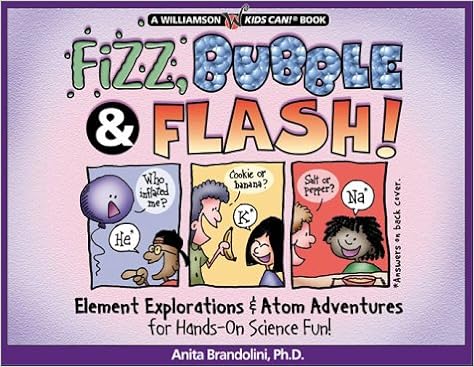
Along with this, we are using Fizz, Bubble, Flash , which goes through various elements by families with lots of hands-on activities/experiments and interesting tidbits about compounds made with those elements.


These books are both fun and engaging, cartoony, yet filled with a LOT of information. Definitely beats a science textbook for this age range.

Monday, February 8, 2016

Language Arts Options For Kids Who Like Variety

I've hard such a hard time sticking with one Language Arts program.  Because of this, we've tried a variety of approaches and materials.  Maybe one day we'll find the perfect fit, but until then, it is trial and error. I like getting a taste of the different approaches because:
  •  I don't think there's one single "perfect" way to teach Language Arts-there's many learning styles and many different needs among all kids. 
  •  I don't think there's any program that will 'teach everything' that encompasses Language Arts-some will focus on writing, others on spelling, or vocabulary or grammar. Honestly, I tried teaching spelling separately and gave up. It just got too be too much, when adding writing on top of that, and grammar, and we only recently started adding vocabulary formally. 
  • I don't think that there's any one program we could always stick with forever for any one child, because the child's needs change over time. Maybe they need work on grammar one year, maybe an emphasis on writing another year, and maybe creativity in yet another year. 
This is what we've used/currently use:

Writing Strands, Level 3 : The text is written to the student so it can be done independently. It gives specific assignments, how much to write, what order to write it in, but doesn't give much guidance in making it sound good. We used it for about a year and then switched to IEW for writing. 


Learning Language Arts Through Literature, Purple Book :  This is a very gentle approach to LA. It covers copywork, spelling, grammar, a little bit of writing and vocabulary, all based on a literature passage. There's some passages which have a whole book study included in the book, and some passages are just passages from another book that the student may or may not have read. We intended to read all the books referenced, but found that 1-2 were not easily found (not in the library). Each day's lesson may only be as short as 4-5 practice words/sentences to practice that day's lesson. It didn't seem very systematic in presenting the spelling or grammar rules, it's just based on what is found in the literature passage. It makes it less 'rote' and 'dry', but may seem a bit haphazard to do '-es' plurals one day, and prepositions the next day, then 'research this person' the next day. But at the same time, it gives variety so keeps it from getting repetitive or boring. The kids thought it was too easy though, but at the same time, these were new lessons to them in terms of various grammar rules or spelling. I think that just speaks to the fact that it makes grammar and spelling seem not-so-out-of-reach. I liked that the spelling words are picked from the passage and chosen by the student based on what they don't know yet.

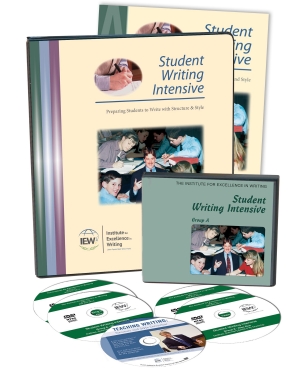
Institute of Excellence in Writing (IEW)- This is a GREAT writing tutorial! We did the Student Intensive A, which has a video that teaches how to structure various styles of writing (e.g. reports vs fictional narratives), and also how to make it sound good with what they call "dress-ups" (sentence openers, adverbs, clauses, transition words). It's VERY specific about asking students to incorporate certain techniques, giving them practice in using them. My kids didn't always enjoy writing this way (being told they HAD to use certain "dress-ups"), but they definitely expanded their writing styles and sounded much more polished after going through this. We are currently using American History Volume 1, but they chose not to write on the topics given. We were still able to use the techniques being practiced, but they chose their own topics to write about.  The topical guides include vocabulary so we have been using this set of words for vocabulary this year. 

Grammar Land - Very old story with the parts of speech as personified characters in a court case. It was pretty amusing and a good introduction to the different parts of speech. I think some of the older language style was difficult for the kids to grasp, but overall, I thought it was a fun way to learn about parts of speech.


Brave Writer, Writer's Jungle - We used elements of this writing approach. It's almost the opposite of the IEW approach, but I think both have valid points about the teaching of writing.  While IEW focuses on specific methods to create structure and style, Brave Writer's approach is more 'question driven', personal, and free-flowing.  The premise to her approach is that writing is an expression of yourself, so you want to be gentle and let students find their voice, and become comfortable expressing themselves in the written language, rather than force them to write on topics they are not excited about and using specific structures that feel awkward to them. I think you need both, so for some periods of time, we use the IEW lessons, and other times, we use the Brave Writer approach, with a lot of 'free writing', and copywork and limited 'must add these things in your writing'.

The Word Snoop - This is a fun book that explains all kinds of interesting tidbits about the English language-palindromes, anagrams, lipograms, malapropisms, oxymorons, etc., plus a history of the evolution of the English language-where it came from way back in history, to current day text-speak. We all loved this-very informative, yet fun to learn about. 


Life of Fred Language Arts - My kids love Fred. He's quirky and smart and talks about a lot of random facts that the kids find very amusing. Even though these are supposed to target high schoolers, my 4th and 6th graders have been doing OK with them. The first one definitely is OK for younger kids, but I've read that the other three books are much harder.  We are now in the middle of the second book, and it does introduce a lot more concepts that may or may not be above their heads, but so far, they are still absorbing the information, if not mastering it.  I believe these books are meant to be read and re-read, so I don't mind them not mastering it all on the first time through, as they will encounter it again later, and at least now, they have been exposed to the information.  This, like the Life of Fred math books, does not go in any particular order and does not present anything as a straight-foward 'lesson', but as Fred's story unfolds, he throws in all kinds of grammar lessons in the midst of telling the story. The downside of this series though, is the lack of practice questions (this would be a 'plus' according to my kids though, as they hate repetition). But because of this, for additional practice and correcting errors, I've started using this next product.

Editor-in-Chief , Critical Thinking Company - We are using Level B1 right now, using their software package rather than the printed book.  This product gives a variety of passages with errors that need to be corrected (grammar, spelling, punctuation, and I think later on, content matching the illustration), The student acts as a 'detective' in searching for these errors and marking the corrections, based on a series of options which they select.  I love the concept, but I think I would go with the book next time. The software is interactive and has 'bonus games' as a reward for completing the lessons, but trying to click on the right reason for the error has been very frustrating for my kids (does the subject/verb agreement fall under 'Usage'? or 'Grammar'? or 'Spelling'?).  They know it's wrong, but can't find where to locate the reason in the menu system.  Both of my kids need a lot more practice in detecting errors in their own writing, but, going by the 'Brave Writer' approach, being critical of their own writing is disheartening, so I like the idea of searching for errors in SOMEONE ELSE'S writing.  

Total Language Plus Study Guides - This incorporates reading comprehension, grammar, spelling, and vocab all based on a piece of literature. There's many guides for specific book titles. We used the one for "Carry On, Mr. Bowditch".  I was drawn to it because it covers reading comprehension, as well as the other areas of LA that LLATL covered, but it includes the entire book in depth, chapter by chapter, not just short passages. I like that this includes vocabulary/spelling with words found in the book, and discussion questions/reading comprehension questions for each chapter. The grammar is mostly dictation and 1 'activity' a week of correction, underlining parts of speech, etc.  I felt that having more direct grammar teaching would have been more useful. I don't know if other study guides are similar, since I only have experience with this one. We ended up skipping a lot of the spelling exercises, just because I don't feel like it was all that necessary. Some kids may enjoy the various spelling practice though (my kids don't).

With all these options, we tend to mix it up every few weeks. Some weeks, we do 1 day a week of copywork/cursive, free write, Editor-in-Chief, Latin/Greek roots(just looking up 2 assigned root words on wikipedia and making an index card for their notes), and 1 chapter of Life of Fred.  Other weeks, we do a week-long writing assignment from IEW. Some weeks, we focus on a single book, like the Word Snoop or doing a study guide from Total Language Plus. I think breaking it up makes it more enjoyable for the kids and keeps them from getting tired of the same thing week after week. 

I'd love to hear any other suggestions of what has worked well for other people and perhaps we'd add it to our medley of choices!

Celebrating Chinese New Year

We don't do many Chinese cultural traditions around here. I cook Chinese food maybe once a week sometimes not at all in a single week, and when I do, we don't even use chopsticks! Maybe it's a product of being raised here in the US; the cultural traditions become more and more diluted the longer people are away from the origins of those traditions.

Every now and then though, there are occasions that prompt me to bring back some traditions, and be purposeful in sharing them with the kids. I want them to know their heritage and have memories of Chinese traditions, even as a half-Asian.

Most of our closest friends are Asian (is that coincidence? is that my own tendency to lean toward common experiences in choosing my friends? and if so, why doesn't my husband have his own tendency toward Caucasian friends? ), and they are in the same 2nd-generation-boat that we're in...grew up here in the US, sprinkling a few Asian traditions in here and there.  We don't sit around talking about Asian-American issues or send our kids to Chinese school, but we DO like to celebrate Chinese New Year together, reliving fond memories from our own childhoods.

Making dumplings as a group is a memory I specifically wanted to pass down to my kids. I remember family gatherings where my parents and the my aunts and uncles would all work together to make lots and lots of dumplings together. They always asked us to help, and occasionally we did, making funny-shaped dumplings, laughing at our awfully mis-shapen results, and then we'd run off and play with the other kids.  It was like history repeating it self when our group of kids do the same thing...but over the years, they are getting more proficient at making dumplings.


We used food.com's Asian Pork and Cabbage Dumpling Recipe for the filling, and my dad's dough recipe, which is 6 cups flour, 2 1/2 cups water, 1/2 tsp salt (knead together until thoroughly mixed and workable). 


We also had a hot pot, with plenty of meat, fish balls, seafood, and noodles, which is another favorite tradition of mine. 


For dessert, we had a huge assortment of Asian treats-egg tarts, pineapple cake, rice cake ('nian gao') in 2 flavors, almond jello, oranges, and sponge cake (not sure that was specifically Asian, but it's reminiscent of the lighter, fluffier cakes that are common in Chinese bakeries)!


Wednesday, December 23, 2015

2 Years Already!?!

I cannot believe it was 2 years ago this week, that we pulled Monkey out of school. I was both scared and excited to start! Looking back, I think I was TOO eager to start, we started right after coming back from our Christmas vacation trip, when I think we should have taken a few more weeks off to 'de-school' before jumping in.  Anyway, hindsight is 20/20, and while it did take a while to get into a groove, I think we have finally found that groove! Adding Bunny to the mix only slightly stirred the pot, but overall, we have gotten in a good routine that seems to be working.

After 2 years, I think we've finally settled into a routine that feels comfortable.

Each week, I pencil in what they'll do for the week. Sometimes I don't know what we'll cover on which day until the night before, so I don't fill it in until after we've completed the day. For History or Science, I have a list of readings, activities, videos, links that we plan to do over a whole unit, which might last 1-2 months, so we just go down the list and try to plan how much to cover each week.


I write up what they need to do for the day on a white-board (sometimes separating the independent vs. work I do with them), and they erase it as they go:

And generally, this is how our day goes: 
  • Morning Bible lesson/devotional together at the breakfast table
  • Science/History - read aloud and any activities together (We are alternating Science/History every couple of weeks)
  • The rest of the morning is spent doing what is on their white-board, which usually covers math, geography, Chinese, and/or language arts. If I need to spend time individually with one of them for any subject, I do it one-on-one, but mostly this is when I do my work for my job.
  • Lunch - While they eat, I will often read aloud some light geography or history when our focus is science, or we will watch a Chinese kids' video over lunch, or practice some Chinese words. 
  • After lunch, they finish up any other individual work that needs to be done, and can read, play, whatever until whatever afternoon activity we have (sometimes shopping errands, or extracurricular activities or playdates). They get screen time if they've finished their work, read something, done something creative, and played outside (or inside if weather is bad). 
It's not quite a schedule and every day there's flexibility for them to choose in which order to do things. When we have co-op or field trips or other activities, we just push things back or skip the 'schedule' for the day. 

So as I enter my third year, these are some of the areas I want to work on:
  • Adding more formal Chinese teaching, maybe introducing more reading/writing, since we've mainly focused on listening and speaking.
  • Getting them to pick up more life skills/chores, such as cooking or cleaning. 
  • Give them some practice with studying and taking tests, since we have not done any testing (we will do our first standardized test this spring).
  • Doing more discussion about their reading. We don't have any reading plan or curriculum right now, so we need to work on understanding more complex literary elements.  
We're in a happy place right now so I don't want to rock the boat too much, but hopefully I'll add these in slowly as we continue. 


Friday, December 4, 2015

Christmas Unit Plans

Next week, I'm so excited that we are planning a week of reading Christmas-related stories. Although we have not done "Santa Claus" at all for Christmas, they know who he is. I wanted to introduce them to some other familiar classic stories related to Christmas, so next week we will read a couple of picture books to introduce them to:
  • The Legend of St. Nicholas
  • The Nutcracker
  • A Christmas Carol 
  • "The Night Before Christmas" poem
We are planning to write our own rendition of "The Night Before Christmas" and maybe watching a version of A Christmas Carol. We are also planning to see a performance by the Russian Ballet of the Nutcracker at the end of the week. This will be their first exposure to a ballet performance. I'm curious what their response will be!  Anyway, I figure all of this can be considered Language Arts (Reading, Poetry) and Music/Arts (Nutcracker Ballet). If I can get them to DO some ballet, perhaps we'll throw in Phys Ed in here. :) 

Weekly Wrapup: Human Anatomy Skeletal System

Taking a break from US History, we've started in on our Human Anatomy unit. We are using Apologia's Exploring Creation with Human Anatomy and so far, I love it! It gives a lot of in-depth detail, with lots of hands on ideas. We are also reading from Sassafras Adventures: Anatomy, because the kids like the adventure story of the Sassafras twins.  The teaching aspect though, is really too high level and rushed, so we use it as an overview/introduction to the system we are studying.  They cover each of the systems in the human body in 2 chapters, with one of the characters usually being an 'expert' that shares information about the various body parts, but I feel like the way it's done, it's all blurted out in a really dense paragraph of scientific detail, thrown in the midst of the adventure story. It's not slowly interspersed, and I think when it's too condensed the kids don't really absorb any of it. So for scheduling purposes, we are going in the order of the Sassafras book chapters so that we can read the story in the correct order, and then skipping around in the Apologia book to use the chapter which corresponds with the system being studied. We are planning about 2 weeks per system.

We started off with the skeletal system, covering joints, cartilage,  bone structure, formation of new bones, names of various bones of the body. Some of the hands-on projects we did were:
  •  a beaded spine craft on a pipe cleaner with sequins in between, different colors represent the cervical, thoracic, and lumbar vertabrae 


  •  looking at a shin bone from a piece of meat to see the compact bone vs the soft inside
  •  looking at the bones of a rotisserie chicken
  •  looked at paper skeleton that we just happened to have access to because my husband made on back in high school


  • soaking a chicken bone in vinegar to see what happens when the calcium is removed by reacting with the vinegar (the bone becomes soft)
Many of the ideas I'm using for our Anatomy plans came from a Konos user who has posted her lessons on her Free Unit-Study webpage. This is a great resource that we're going to use throughout our unit. 
 
We also tied in our Chinese lessons, learning the words for various body parts, as well as the word for bone.  Unfortunately, my Chinese vocabulary doesn't extend to words like "osteoblasts" or "cartilage" or "mandible"! 

While we are taking a break from History, I am still reading aloud from George Washington's World, which gives us a brief look at what was going on in the world during various parts of George Washington's lifetime. We are not studying world history in depth right now, but this will give a bit of backdrop to the events of American History that we had recently studied, so later on, when we do world history they will have some familiarity with it.

This post is linked up with Weird, Unsocialized Weekly-Wrapup.