Thursday, January 22, 2015

Favorite Picture Books


My first post about reading aloud featured only chapter books, but we've been reading to our kids since they were babies, so I thought I would feature some picture books that we've really loved.

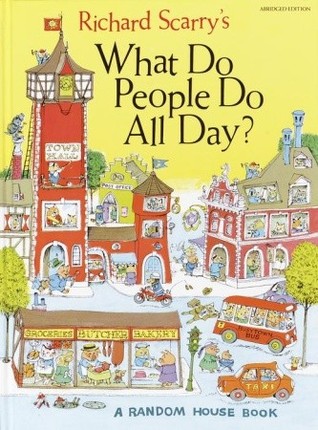
What do People Do All Day? - Richard Scarry - This has a 2-page spread for various settings, such as a bakery or a saw mill. There's so much to learn as it describes the different steps of how everyday things are made, and the different people and machinery involved. So much to look at and point to!! We read this over and over, not all at once, maybe focusing on 2-4 pages at a time, because it is to take in! We loved Richard Scarry's "Busytown" books, but this one was one of our favorites of them.


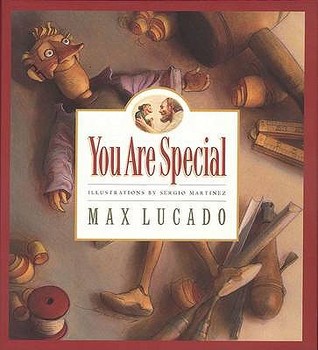
You Are Special - Max Lucado - Simple but powerful story about how each person is special and loved, and not to let other's opinions dictate your self-worth. A beautiful allegory of God's unconditional love. We loved all Max Lucado's picture books featuring the Wemmicks, including If I Only Had a Green Nose (great story about not following the crowd).


The Red Thread - Grace Lin  - A touching fairy tale about a King and a Queen that search for child to bring into their home. We love how Grace Lin brings Asian culture into children's books. Two others of her picture books that we enjoyed (and introduced our kids to Asian culture) are The Ugly Vegetables and Dim Sum for Everyone. She's one of my favorite Asian American authors.


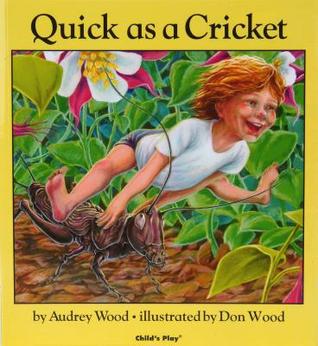
Quick as a Cricket - Audrey Wood  Beautifully illustrated book that celebrates the diversity of personal attributes - quiet, loud, slow, quick, small, large, etc.


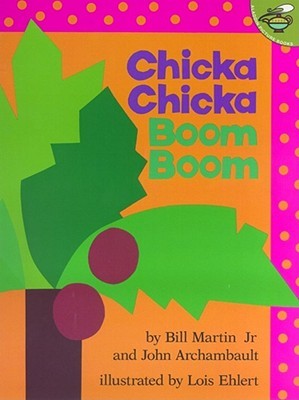
Chicka Chicka Boom Boom - Bill Martin, Jr. Great introduction to the alphabet! The rhythmic prose just begs to be read aloud!


This is just a small sampling of the great books we read when the kids were toddlers and preschoolers. Of course, there's so many more that are great read-alouds for the younger crowd, including all the Dr. Seuss books, Corduroy books, the Berenstain Bears (our kids LOVED these, but there's too many to list, and hard to pick a favorite), But really, ANY book is probably better than no books, and kids will gravitate to their own favorites. It's a little overwhelming, actually, to see how many picture books out there there are, but the more you read, the more ideas the kids will be able to explore!

Wednesday, January 14, 2015

Our Favorite Read Aloud Books


We are a family that LOVES reading aloud.

We began when our first child was just 6 months, and we haven't stopped. Along the way, we expanded from bedtime reading during our 10-11 hour car trips (I didn't want to just throw them in front of electronics) to visit family. To save our voices, we started using audiobooks on CD. Our first trip using audiobooks was probably about when the kids were 4 and 6 years old. They are now 8 and 10, and any car trip over 2 hours includes a book on CD. When we're at home, we read aloud after dinner or during quiet moments during the weekends. Some of the schoolwork we do as read-alouds too, because sometimes, reading aloud is what it takes to get them interested in the book enough for them to read it independently.

There's so many reasons we love reading aloud:
  • It introduces ours kids to more advanced literature, with more vocabulary and complex sentence structure, than they can read independently.
  • It lets them explore different genres that they are unlikely to pick on their own.
  • It something we can all participate in and enjoy as a family, creating wonderful bonding moments and something we can all talk about together.
  • It fosters discussion about a lot of different topics, opening up many teachable moments. There's history, sociology, psychology, science, culture...
I keep a running list of all the books we've been reading, but here are some of my favorites (the links below link to the book listings at the Goodreads website, where I like to review the books we've read. Because the reviews may have spoilers, beware of that if you want to read people's comments):

  
Wonder - R. J. Palacio - Wonderful story about being different and finding your place. 


The Lion, the Witch, and the Wardrobe  - C.S. Lewis. We loved the whole Narnia series, but especially this first one.

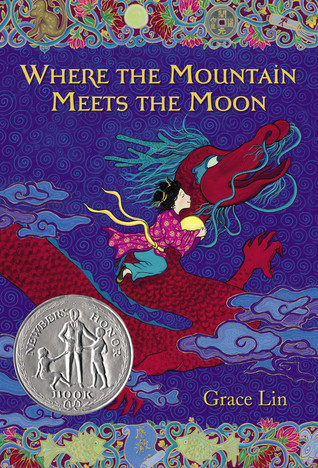
Where the Mountain Meets the Moon - Grace Lin . Beautiful, fanciful story taking place in China


Tales of the Kingdom -  David and Karen Mains - Allegorical tale of God's Kingdom. This is a trilogy and we loved the entire thing.


   Little House series - Laura Ingalls Wilder - Loved these classics!


Treasures of the Snow - Patricia St. John - A heartwarming story of forgiveness and love and change of heart.
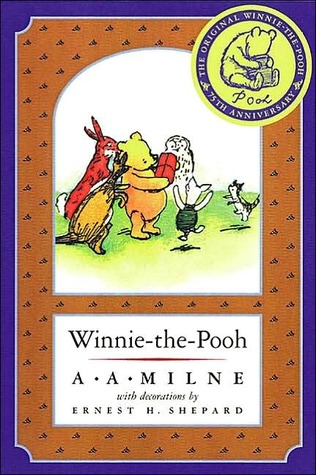
Winnie-the-Pooh - A.A. Milne (and of course, the House at Pooh Corner too) - Always a classic

The World According to Humphrey - Betty Birney  - fun, but also touching, story told from the point of view of the classroom hamster.  We read the whole series, and I wouldn't say we loved ALL of them, but I loved the first one, and many of the others were very good as well.

  
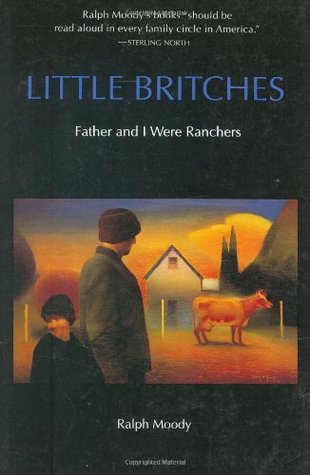
Little Britches Series - Ralph Moody -  This is an autobiographical series written about the author's boyhood, in the early 1900s. It's almost like a 'Little House' series for boys. The first installment starts with the family moving west to become ranchers in Colorado, and the remaining books follow Ralph to various places in the US as their family moves around. There's a wonderful theme of hard work and resourcefulness and family that runs through the series. 

The Hobbit - J. R.R. Tolkien - This is one of our favorite classic fantasy stories. It's got quite a lot of humor and adventure in it. 


Tuesday, December 9, 2014

Indecisiveness -> Plenty of Options


I'm a very indecisive person.

I research everything, trying to make sure I pick the best option.

I read reviews, I ask people for recommendations, and if I can, I try to check things out first-hand. I just don't want to make a "wrong" choice.

So when it comes to choosing what resources we use in our homeschool, it was very hard for me to pick just one and stick to it. Because of that, I find myself using multiple resources. Everyone has their favorites, and there is a lot of quality materials out there! Each one has different strengths and styles, so it's hard to know which to pick!

Math: I use both Singapore Math and Life of Fred.

Language Arts: I use Learning Language Arts through Literature, Institute of Excellence in Writing, as well as Writing Strands. I also use some ideas from Brave Writer and Drawn Into the Heart of Reading.

World History: I'm using Mystery of History, Story of the World, Critical Thinking's World History Detective and as an additional supplement, the Usborne Encyclopedia of Ancient History.

On top of that, I have all 3 volumes of KONOS, because I couldn't decide which one to start with! (Thank God for used book sales!)

When I plan out our weeks, I intersperse the different resources so we may use several in a single week, or sometimes I'll stick to one for a week, then switch to another for another week. This allows me to get broad coverage of topics, and hopefully Monkey is getting the benefit of the various strengths that each one provides. It also allows me to try it out, and rule out one or more options if I decide it won't work for us. It's hard to decide anything based on reviews and recommendations. When we actually use a something, we can see whether it works or not for Monkey.

Since most books tends to be set up for 1 year's worth of material, this means we have to either double up our workload, or spend a longer time on completing each book. I'm not worried about taking as long as we need. I'm also not worried about skipping sections that I think are repetitive from some other source.

Because I'm so new to homeschooling, I'm not sure how sustainable this is. Maybe at some point I'll have to just commit to one thing and run with it, but for now, I like being able to explore!


Monday, December 8, 2014

Kids' Chapter Books With Asian Americans as Main Characters


When I was a kid, there were virtually no books about being an Asian kid in America.  I grew up reading Sweet Valley Twins, Ramona, Boxcar Children, and the like, and I enjoyed them. However, there was never a character that I could really relate to, growing up as the only Asian in my grade at my school - looking different than everyone else, celebrating different holidays than everyone else, eating different food than everyone else, speaking a different language at home than everyone else.

Fast forward 20-30 years, and there's some great choices now available for elementary-aged kids, with main characters who are Asian American. Here are some of my favorites:


Grace Lin's Year of the Dog and sequels Year of the Rat and Dumpling Days. Young Pacy is in elementary school and grows up in an suburban America.  She lives her life as a clear minority in her school, but feeling for the most part like other American kids. As the books progress she notices that she's not as American as the rest of her friends. As she struggles internally with being Chinese on the outside, yet American on the inside, she learns about Chinese traditions and she learns to embrace her heritage and her unique situation of being Chinese, growing up in America.


Lenore Look's Alvin Ho series is a written from the point of view of a Chinese American elementary-aged boy. Alvin has many fears to overcome and the books cover a wide range of situations. It is very kid-friendly to read, with humorous lists, and many 'kid-comments' strewn throughout the book. It does not focus on his identity as an Asian, but he does struggle with not having many friends and being different from kids around him, which is a common situation among Asian American kids. We've read 2 of the books so far.


Lenore Look's other series Ruby Lu stars a 7-year-old Chinese American girl who has her share of antics. She reminds me alot of Beverly Cleary's Ramona-has her set ideas about stuff, gets into trouble, learns some lessons along the way, etc. There are little bits related to being Chinese woven throughout the book, but it is not the main focus. She goes to Chinese school and Chinese words are mentioned here and there(using Cantonese and Taishanese dialects), and the first book sets it up for some relatives from China to come live with them, but for the most part, it's the story of a little girl growing up in America.   I have not read any other books beyond the first book yet.


In the Year of the Boar and Jacking Robinson by Bette Bao Lord follows a 5th grade girl who immigrates from her comfortable, familiar life in China to New York City. While she deals with culture shock and being the outcast, she feels a connection to Jackie Robinson, as an example of someone of another race who lives the American dream, and discovers that she too can embrace America as the land of opportunity.


 Year of the Book is the first of a series of books by Andrea Cheng about an elementary-aged Chinese girl growing up in America. Being Chinese is secondary to the storyline, where Anna struggles to make friends and navigate the social dynamics at school. In the other books, her Chinese heritage comes more into play


My kids are mixed race, and that is a whole other ballgame. I haven't really seen many books for kids that deal with being bicultural, so I only have these to mention:


Half and Half by Lensey Namioka tells the story of a middle-school aged girl who is half Scottish and half Chinese. She faces comments made by various people who assume she must be more of one culture than another and she wrestles with what it means to be bi-racial. While she explores both of her heritages, she ends up with a dilemma where she is double booked and seems she must choose between doing 2 events, one highlighting Scottish culture, and one highlighting Chinese culture.


Shanghai Messenger by Andrea Cheng follows a half Chinese girl of 11 who is invited to visit her extended relatives in Shanghai.  At first apprehensive about her visit, she discovers a wonderful new world in China among her relatives who welcome her.  This isn't actually a chapter book, but it's not quite a picture book either. It's written with poetic prose, with short glimpses of moments throughout this journey, and as you read about each event, you can see her letting go of her worries (of not being accepted for not being fully Chinese, of being among people who speak a language she doesn't speak, etc) and embracing her Chinese heritage.  Being half-Chinese plays a role in her insecurities, but I think even those who are full-Chinese, but grown up in America, would be able to relate.




Monday, November 24, 2014

Weekly Planners


I've tried 3 different ways to plan our weeks.  I'm still not sure which to stick with. Perhaps we'll just switch it up every now and then for variety, because each has its pros and cons. At first, Monkey didn't like option 3, because he wanted to know EXACTLY what he needed to do for the day, but option 3 is the one we've been using the past 2 weeks, and he found that he wanted to try to 'get more done' so he can have the rest of the week free. Ideally, I'd like for him to be able to budget and plan his own time, so I think personally, I like option 3.We'll just have to see if he really can stick to his own planning, or if it will have to switch back to daily schedules so that we don't get too far behind.

1. Daily Grid with Subject


This is what is pictured above. Days of the week across the top, subjects along the left side. We did this for most of the year. 

Pros: Can see exactly what subjects are covered each day. Sometimes we skip one or two subjects a day, so at a glance it's easy to see empty boxes. No arguments about what is supposed to be accomplished in a day.

Cons: If we don't get to something on one day, it annoys my 'control-freak' side to have an unchecked item. Monkey also tends to only look down the list for that particular day, and doesn't look back to previous days to see what he's missed, so he forgets to do leftover work from previous days. Monkey also doesn't really think to work ahead, and get the next day's work done in order to finish up early for the week. Also, it LOOKS like a lot of work each day, seeing the whole list taking up the whole page, so that sometimes feels overwhelming to Monkey.

2. Daily Lists

This is a list by day, listing the agenda for each day.

For example,

Monday:
  • Math - Singapore p. 6
  • Language Arts - Lesson 1
  • Science - Read pp. 55-59
  • Chinese - iPad app game
Tuesday
  • Math - Life of Fred, Chapter 3
  • Language Arts - Lesson 2
  • History - Read "Pilgrim Stories"
  • Chinese - watch video
Pros: Short concise daily list. Looks more manageable when you only see a short list.

Cons: Hard to see a quick glance whether there's a gap in work for a particular subject. Also the same issue as the daily grid in terms of missed work or working ahead.

3. Subject Lists
This is a list of assignments by subjects, enough work for a week (or more). No dates are mentioned, so each day is flexible as to what work needs to be done. 

For example,

Math
  • Singapore -  p. 6
  • Life of Fred - Chapter 3
  • Singapore - p. 7
  • Life of Fred - Chapter 4
Language Arts
  • Lesson 1
  • Lesson 2
  • Write Draft of Report
Science
  • Read pp. 55-59
  • Milk Experiment 
Pros: Flexibility in scheduling what to do each day. If one item doesn't get done one day, it can be planned for the next day. Can easily do extra work and be finished early, and have free time at the end of the week. 

Cons: Have to decide what to do each day, which is an extra step. If not everything is done by the end of the week (or whatever time period), there's a mad rush to finish up. If Monkey is not good a budgeting his time, there's a lot of stress toward the end of the week.

Wednesday, November 19, 2014

Library Visits

We go to the library a lot. We check out lots and lots of books! We depend on the library for much of our homeschooling. 
Books from the library (except for that Taboo game)
While we don't follow the Charlotte Mason model exclusively, I do love the CM philosophy of using living books, rather than textbooks for learning. It has really made learning come alive.  I feel like *I'm* learning so much, reading through these books. Perhaps I would have developed a stronger passion for learning as a child if I was reading living books, rather than textbooks! (I would say most of what I learned in history was textbook style. I read the text, memorized some facts, regurgitated it on the tests, got straight As, and promptly forgot everything I read.)

Most of what we've done for science, history, and geography has been done using living books rather than textbooks. I do supplement with a textbook sometimes, just to make sure I'm not missing anything, but I can tell Monkey loses interest quickly with them. So each week, at LEAST once a week, we visit the library. I usually reserve books online ahead of time, based on book lists from various curricula (Sonlight, KONOS, My Father's World).  We don't always use all the ones we check out, and sometimes we request things through Inter-Library Loan when our library system doesn't have it. It's been an incredible resource for us to keep our homeschooling costs low. I don't buy any books unless I'll have to use it for longer than a month. Most of our units go 1-3 weeks, and we can always renew them, for up to 3 months anyway!

With so many books checked out though, there's inevitably misplaced ones and overdue ones. While it's annoying to have to pay the fines, I think it's a small price to pay for the enormous amounts of books we have access to. I consider it a donation toward the library. 

Tuesday, November 18, 2014

Why We Love Homeschooling

There's a great post on Weird, Unsocialized Homeschoolers about 50 Reasons Why Homeschooled Kids Love Homeschooling. I love all the responses(although some of them don't really apply to us, since I work most days of the week, so we can't do field trips whenever we want), and I wanted to find out what Monkey thought. His answers were:

  • Because I get more time to play
  • Because I get to stay home with Mom
  • Because I can learn fun things
  • Because I can do harder stuff
I am so glad that Monkey is enjoying homeschooling, because I am loving it too! Why do I love it?
  • Because I can spend more time with Monkey (and hopefully Bunny someday too).
  • Because I can see Monkey become engaged with learning, rather than grudgingly doing assigned work.
  • Because I have the flexibility to teach what interests Monkey and to introduce different topics that I think are important.
  • Because I really enjoy planning and selecting material for different topics.
  • Because I am learning too, as I teach.
  • Because we have more free time so the time when we are home is not rushed and crammed with work that someone else told us we have to do. (Bunny is pretty efficient at her homework, so her time at home is only minimally impacted by homework).